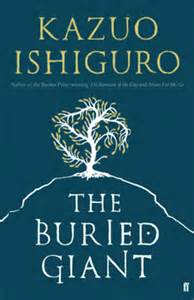
My Kyrosmagica Review of The Buried Giant by Kazuo Ishiguro

th

Goodreads Synopsis:

An extraordinary new novel from the author of Never Let Me Go and the Booker Prize-winning The Remains of the Day.

“You’ve long set your heart against it, Axl, I know. But it’s time now to think on it anew. There’s a journey we must go on, and no more delay…”

The Romans have long since departed, and Britain is steadily declining into ruin. But at least the wars that once ravaged the country have ceased. The Buried Giant begins as a couple, Axl and Beatrice, set off across a troubled land of mist and rain in the hope of finding a son they have not seen for years.

They expect to face many hazards – some strange and other – worldly – but they cannot yet foresee how their journey will reveal to them dark and forgotten corners of their love for one another.

Sometimes savage, often intensely moving, Kazuo Ishiguro’s first novel in a decade is about lost memories, love, revenge and war.

My review: 

Kazuo Ishiguro’s The Buried Giant is an ambitious endeavour which combines elements of fantasy with literary and historical fiction. It is a philosophical tale replete with deep insights regarding family love and loyalty, trust, forgiveness, old age and memory loss, marital love, and war. At the heart of this story the premise is this: in a long life our memories will not always be happy ones, free from any hurt, or guilt. All human beings make mistakes and do hurtful things, therefore, is it better to leave these painful memories buried?  But if you do so how will you ever learn from the tragic historical mistakes of the past? Moreover, if you are unable to remember your family, the people you love, the life that you live, then what do you truly have? One only has to consider a victim of Alzheimer’s to understand the devastation that this brings. This gift of remembrance comes with a price, it is a double-edged sword as you will find if you read the book.

The Buried Giant, as its name suggests, is a slow almost laborious read to begin with. In fact I almost felt as if the mist of forgetfulness was engulfing me as I was reading!  Some might find the development of the story line to be too slow for their taste, and may be switched off the book because of it, this is most definitely a novel that will divide opinion. If you like a deeply thoughtful close read, I would recommend this, but prepared for the slow start.  The true meaning of the book’s title, The Buried Giant, remains a mystery hidden in the mists of the story right until it is time to reveal its true meaning.

The time period is mythical old England. The Buried Giant features an elderly Briton couple, Beatrice and Axl, who set of on a journey from the village in which they live, an underground habitat connected, “one to another by underground passages and covered corridors,” to their son’s village to find him. This sounds a simple enough quest but this isn’t just an ordinary reunion, no, Beatrice and Axl can hardly remember what their son looks like, nor can they even remember recent life changing events that have happened to them. In fact the past has now taken on the qualities of a mist: “I mean that it had somehow faded into a mist as dense as which hung over the marshes.” Axl feels the pain of this lack of remembering particularly when it is about their son: “Many things I’ll happily let go to it, but its cruel when we can’t remember a precious thing like that.”

They are joined on their quest like adventure by an injured boy, Master Edwin, and a Saxon Warrior, Master Wistan. The warrior appears to be a man of great character who is able to withstand spells. All four of these characters, Axl, Beatrice, Edwin, and Wistan, are looking for something or someone. Edwin, Axl and Beatrice are all wishing to be reunited with a much-loved but mostly forgotten, family member, in Edwin’s case it is his mother. The warrior Wistan sees a special quality in his protégé Edwin that he feels sure will lead him to the She Dragon Querig :  “I chose you above others, Master Edwin, because I saw you had the hunter’s gift to match your warrior spirit.”

They meet an aged knight, Sir Gawain, the “nephew of the great Arthur,”  and his elderly horse, Horace.  The once mighty Sir Gawain has been given the task of  slaying Querig, but it appears that in his enfeebled state, Sir Gawain has failed in this endeavour and the She dragon still lives.  Sir Gawain continues to defend the honour of Arthur who he believes has brought a lasting peace to Britain.

Sir Gawain reflects on Edwin’s injury:  ‘That’s no ogre’s bite the boy carries.” The Villagers superstitions’ lead them to believe that Edwin will turn into a fiend himself.  The reader begins to wonder is this an ogre’s bite or a dragon’s bite? The young boy’s behaviour becomes stranger the closer that he gets to the She dragon’s lair,  this mimics an earlier episode in the book when Wistan pretends to be an idiot,  this device connects these two characters, suggesting Wistan’s hold over Edwin.

On the quest we are introduced to a rich array of characters in keeping with the fantasy, (magical realism,) element of this story,  to name a few there are:  ogres, monks, sprites, a beast, pixies, a bird like old woman, a she dragon, and the all important boat man, who ferry people to the island of the dead. When we meet the bird like old woman she is clutching a rabbit that she intends to kill.

file

**** Some minor spoilers below in italics****

This bird like old woman appears to be taunting a thin unusually tall boatman. But nothing is quite as it seems. At first glance it appears as if the boatman is the victim of this strange woman’s hideous behaviour.  But could it be that the woman has suffered an injustice at the hands of the boatman? The old woman recants a tale of being questioned by the boatman about the bond between her husband and herself. This bond is deemed too weak by the all-knowing boatman. She is tricked and forcibly parted from her husband and offered a rabbit as recompense for her first night of never-ending solitude.  Can you imagine? What a wicked thing! Beatrice is fearful that the loss of memory that she and her husband are currently experiencing will lead to their enforced parting too. She fears that they may let some less than perfect confession slip when answering the boatman’s far-reaching questions about the worthiness of their love.

Later it is suggested that the weary old couple, Axl and Beatrice, will  defeat the she-dragon with a poisoned  goat given to them by abandoned children whose mother has forgotten them. Again, the theme of forgetfulness, and loss permeates the many layers of this novel. This seems ridiculous at this point in the novel, yet it isn’t as far fetched as it seems, as Axl and Beatrice are now as enfeebled as the dragon. 

As for the warrior Wistan, he has been taught by Lord Brennus to hate  Britons. Now Wistan hopes to ensure that his protégé, Edwin, hates Britons too. Later Edwin questions whether this should apply to all Britons, even to their fair-minded companions, Axl and Beatrice. Will the circle of hate continue if Querig is destroyed and the mist is lifted?

Superstition plays an important role in this tale, the She dragon Querig is attributed with having caused the mist. It is suggested that Merlin placed a spell on her breath. Gawain states that,”Without this she-dragon’s breath, would peace ever have come?” But there are others who think that the mist is God’s forgetting, or possibly God’s punishment for man’s evil. When Axl and Beatrice are sheltered by Ivor, Ivor says to Beatrice,”The stranger thought it might be God himself had forgotten much from our pasts, events far distant, events of the same day.”

There is a sense of a past laying below the surface waiting to reappear, like the mist clearing, and little by little Axl begins to recollect days of wars. He recalls the slaughter of women, children and elderly. “A slaughterer of babes.”

When finally the reader is acquainted with the once mighty Querig, one wonders whether this creature is now to be pitied? This once fearsome creature has aged like three of the characters who seek it: Axl, Beatrice, and Sir Gawain. The warrior and Sir Gawain at this point in the novel have utterly opposing views, “Leave this place, sir, I beg you.” Wistan considers that,”what kind of god is it, sir, wishes wrongs to go forgotten and unpunished?” When they fight, their blades lock in what initially appears to be a matched battle, suggesting they both believe in the true justice of their contrasting opinions. The rest you must learn by reading the book.

Ultimately, if the dragon is indeed slayed will the result be peace and happiness for all? What impact will this have on Beatrice and Axl? Will their memories be restored? If  they are, will this bring them joy or pain? Will the Britons and Saxons be divided once again?

The final conclusion is heart breaking, a powerful ending. I waited a long time for this emotionally charged moment, it came right at the end but it was worth the wait. I liked this novel, and appreciated the thought that went into its crafting, but somehow it didn’t quite reach the heady heights of my favourite shelf.  The slow progression of the novel, and some of the slightly irritating habits of the characters dragged it down, Axl’s constant referring to his wife, as his “princess” comes to mind. Yet, The Buried Giant left me thinking….. Yes, it is a deeply thoughtful novel, one to ponder on and consider.

Highly recommended for readers of: Literary Fiction, Historical Fiction, and Fantasy.

Note for fantasy readers: the fantasy element in this novel is used “as a means of distraction from realities too painful to face.” See http://www.theguardian.com/books/2015/mar/08/kazuo-ishiguro-rebuffs-genre-snobbery

My rating:

4 stars. A hard one to rate, the slow start, though possibly unavoidable, meant that it dragged a bit for me, so didn’t quite hit the giddy heights of a five-star read, so I’d say, a very solid 4 stars.

Have you read The Buried Giant? Do leave a comment below I’d love to hear from you.

file

Marje @ Kyrosmagica xx

My Kyrosmagica Review of The Name of The Star by Maureen Johnson

WIN_20150414_092822

Goodreads Synopsis:

The day Louisiana teenager Rory Deveaux arrives in London marks a memorable occasion. For Rory, it’s the start of a new life at a London boarding school. But for many, this will be remembered as the day a series of brutal murders broke out across the city, gruesome crimes mimicking the horrific Jack the Ripper events of more than a century ago.

Soon “Rippermania” takes hold of modern-day London, and the police are left with few leads and no witnesses. Except one. Rory spotted the man police believe to be the prime suspect. But she is the only one who saw him. Even her roommate, who was walking with her at the time, didn’t notice the mysterious man. So why can only Rory see him? And more urgently, why has Rory become his next target? In this edge-of-your-seat thriller, full of suspense, humor, and romance, Rory will learn the truth about the secret ghost police of London and discover her own shocking abilities.

My review:

I’ve been meaning to read this novel for ages. I was delighted to listen to Maureen Johnson, and Leigh Bardugo at the Edinburgh International Book Festival last August talking about Alternative Worlds. In fact there is a write up of this wonderful event on my blog on the 25th of August under the heading Author interviews and Talks. So check that out.

In my opinion The Name of The Star, (The Shades of London #),  really captures the reader’s imagination about half way through the story. Up until the half way mark it’s a little slow, bogged down by the detail of introducing the setting and the characters. But, on the whole it is quite an engaging story, and Maureen does a great job keeping us entertained with her little witticisms. Luckily the pace livens up in the second half of the novel,  and elements of the story are revealed that make it a much more exciting tale, so watch out for that! I would say the writing style is not complex, it is more middle grade, yet the topic is YA, which makes it an easy, fast read.

Rory is from Louisiana but has been sent to Wexford Academy, a boarding school in London. Despite the culture shock, Rory settles into Wexford without too much difficulty. Although she does feel somewhat challenged by the emphasis on sport, particularly hockey. Still, everything else seems to be going well, and she likes her new roommate Jazza.  Her boarding school happens to be in the same area that was terrorized by Jack the Ripper in 1888. Weirdly it seems as if Jack is back in town, and wants to greet Rory. “It was as if the news itself wanted to reassure me. Even Jack the Ripper himself had reappeared as part of the greeting committee.” There are CCTV cameras all over London, yet this isn’t deterring someone from carrying out copy cat Jack The Ripper murders.  With the murders comes a new flat mate, Boo, who seems very different from Rory’s flatmate Jazza, and everything begins to change. I liked Maureen’s choice of name, Boo, for Rory’s new flat mate, very witty!

It’s a new twist on the Jack The Ripper story and on the whole it works well. The characters are well crafted, particularly Rory, the main female character, and for the most part the story line is believable, (bearing in mind that this is about ghosts!) Though, I did wonder a bit about the method used to zap the ghosts into oblivion possibly this stretched the powers of believability a bit. Though, Maureen Johnson likes to be humorous so maybe she was thinking of changing channels on her TV when she came up with the idea! No, more about that, I don’t want to spoil it for you. The book appears to be well researched, you get the sense that Maureen Johnson tiptoed around London snooping around to find out all she could about the various parts of London where Jack the Ripper struck.

There is a touch of romance in the story, Jerome the love interest, seems to be obsessed with Jack the Ripper, in fact he encourages Rory to sneak out of Wexford through a broken window, to  a roof top vantage point at Aldshot,  hoping to see something. Jerome sounds a bit daft, and fool-hardy, typical teenage boy material. Later on the way back Rory does indeed see something, or possibly someone, but her flat mate does not, adding to the mystery. I had the sense that Maureen Johnson didn’t intend that this romance was to play a big part in the novel, in a way it seemed to be a bit of light-hearted relief for Rory, a snog with obsessive Jerome, seemed to take her mind of the Ripper’s devilish plans. You can’t blame the poor girl.  If you are looking for a well developed romance this isn’t it, this feels more like a bit of a light-hearted temporary diversion, with a very satisfactory snog as a compensation.“Kissing is something that makes up for a lot of other crap you have to put up with…It can be confusing and weird and awkward, but sometimes it just makes you melt and forget everything that is going on.”

Favourite quotes:

“Fear can’t hurt you,” she said. “When it washes over you, give it no power. It’s a snake with no venom. Remember that. That knowledge can save you.”

“And if we get caught, I will claim I made you go. At gunpoint. I am American. People will assume I’m armed.”

“I decided to deflect her attitude by giving a long, Southern answer. I come from people who know how to draw things out. Annoy a Southerner, and we will drain away the moments of your life with our slow, detailed replies until you are nothing but a husk of your former self and that much closer to death.”

“The English play hockey in any weather. Thunder, lightening, plague of locusts…nothing can stop the hockey. Do not fight the hockey, for the hockey will win.”

“Walk really, really carefully. It’s not complicated, but if you mess up, you’ll die, so pay attention.”

“It was almost funny. Life seemed downright accidental in its brevity, and death a punch line to a lousy joke.”

“Something about her suggested that her leisure activities included wrestling large woodland animals and banging bricks together.”

Recommended for readers of Young Adult, Mystery, Paranormal, Historical Fiction, Horror.

My rating:

4 stars – The beginning is a bit slow probably a 3.5 star beginning but it picked up pace so I award it 4 stars overall.

imagesFA9DHJ69

Have you read The Name of The Star? Do leave a comment I’d love to hear from you.

file

Marje @ Kyrosmagica xx

My Kyrosmagica Review of The Gift Of Rain by Tan Twan Eng

th4KBLF3A1

Goodreads synopsis:

Penang, 1939. Sixteen-year-old Philip Hutton is a loner. Half English, half Chinese and feeling neither, he discovers a sense of belonging in an unexpected friendship with Hayato Endo, a Japanese diplomat. Philip shows his new friend around his adored island of Penang, and in return Endo trains him in the art and discipline of aikido. But such knowledge comes at a terrible price. The enigmatic Endo is bound by disciplines of his own and when the Japanese invade Malaya, threatening to destroy Philip’s family and everything he loves, he realises that his trusted sensei – to whom he owes absolute loyalty – has been harbouring a devastating secret.Philip must risk everything in an attempt to save those he has placed in mortal danger and discover who and what he really is. With masterful and gorgeous narrative, replete with exotic and captivating images, sounds and aromas – of rain swept beaches, magical mountain temples, pungent spice warehouses, opulent colonial ballrooms and fetid and forbidding rainforests – Tan Twan Eng weaves a haunting and unforgettable story of betrayal, barbaric cruelty, steadfast courage and enduring love.

My review:

The Gift of Rain by Tan Twan Eng is a story set in Malaya in World War Two told through the eyes of Philip Hutton, a young man who feels like an outsider in his own family.

There are many aspects of this wonderful book (Nominee for the Man Booker Prize Longlist 2007) that I really enjoyed:

 The main protagonist Philip doesn’t feel that he belongs in either culture, being half Chinese with a  Chinese mother, Khoo Ui Lian, and a British father. His Grandather Khoo is estranged from the family too. In time his grandfather takes Philip to the Leong San Thong Dragon Mountain Hall temple built by the clan association of the Khoo. His grandfather accuses Philip of “the great human capacity for choosing not to see.”  He predicts that his choices will never be the completely correct ones,” and “That is your tragedy.” But growing up of mixed parentage, “that is your strength.” I related to this in some ways, as I am also of mixed parentage, my father is Scottish and my mother is a Eurasian from Malaysia.

Philip is not close to his siblings Edward, William and Isabel therefore it is not altogether surprising that he is attracted  to a Japanese man, Endosan, an outsider, who appears to be so powerful that he says: “Now you will always remember me as the man who taught you to touch heaven.”

The references to martial arts – Under the influence of Endosan’s (Mr Hayato Endo) tutelage in Aikijitsu, Philip becomes very close to him, so much so that he trusts him with details that maybe he should not. He must make one of two horrendously difficult choices either to work with or against the Japanese during the occupation of Malaya.

It is a novel about choices and consequences, Philip takes a different path from his friend Kon, even though they started off on a similar route both learning Japanese martial arts. Ultimately, the choices that the two young men make lead them in conflicting directions. Even though Philip isn’t close to his family he does want to protect them and his father’s business from harm. But, his good intentions do not have the desired effect, in fact his ploy seems to work against him in many ways, destroying lives, and making the divide between himself and his father and sister much greater. Later he tries to make amends, fearful for his life and his family’s life after witnessing the terrible atrocities carried out in the Kempeitai cleansing campaign.

The Gift of Rain acts as a confessional told through the perspective of an aging Philip confessing his life story to an elderly sick Japanese woman who has appeared at his doorstep unannounced. Both Michiko and Philip share a love for Mr Hayato Endo, and therefore Philip feels comfortable sharing this story with her, as he believes she if anyone will understand why he chose the path that he did. There is a sense in the story of everything in life being connected, a continuum of many lives in which Philip will meet Endosan again and again.

Tan Twan Eng weaves a tale of dreadful cruelty entwined with cultural niceties that breathes life into the story, one only has to experience Goro’s cruelty with the piano playing episode in the book to see this  strange partnership in action.

Tan Twan Eng uses the themes of delicate butterflies and fireflies, and a family portrait taken before Philip’s brother goes off to fight to suggest the fragility, and wonder of life. At a particularly sad, and heart-wrenching point in The Gift of Rain, we are told that: “I never saw any butterflies.”

It questions what we consider to be fair and just in a war. It is a world in which the family chauffeur will eventually feel justified in betraying a member of the family, as he considers that:  “This is justice.”

There is a sense that those pre-war days were magical and life cannot ever be the same again: “But those were magical days just before the threads that bound the world became unravelled. ”

I love the fortune teller aspect of the novel, and the concept of the gift of rain. The fortune teller in the Temple of Azure Cloud told Philip: “You were born with the gift of rain. Your life will be abundant with wealth and success. But life will test you greatly. remember –  rain also brings the flood.” She also says: of Endo-san: ‘He’s a Jipunakui – a Japanese  ghost. I do not read their futures. Beware of him.”

I love that it is set in Malaysia. Particularly at this time in history as I have heard stories from my mother passed down from her family about Malaya during the Japanese occupation. Tan Twang Eng depicts the setting so wonderfully that you just feel as if you are there and it does make you wonder what would you would have been prepared to do to keep your family safe if you were in Malaya at that time.

So a thoughtful novel which I really enjoyed from start to finish. I would highly recommend it to readers who enjoy Historical fiction, Cultural, War, and Asian literature.

DISCLAIMER: “As of 13th September 2017 we are a participant in the Amazon Services LLC Associates Program, an affiliate advertising program designed to provide a means for us to earn fees by linking to Amazon.com and affiliated sites.”  

My opinions are my own and any reviews on this site have not been swayed or altered in any way by monetary compensation, or by the offer of a free book in exchange for a review. 

Buying Links:

Kindle UK: http://amzn.to/2y0g9yS

Paperback UK: http://amzn.to/2hpVtJz

Hardcover UK: http://amzn.to/2hoMU1Q


My rating:

5_stars_clipart

5 stars.

Bye for now.

file

Marje @ Kyrosmagica xx

This blog claims no credit for any images posted unless otherwise noted. Images on this blog are copyright to their respective owners. If there is an image on here that belongs to you and you do not wish for it to appear on this site please contact me and I will have it removed.

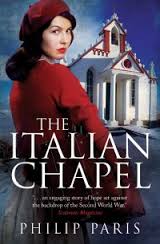
My Kyrosmagica Review of The Italian Chapel by Philip Paris

download (2)

Goodreads Synopsis:

The Italian Chapel is a story of forbidden love, lifelong friendships torn apart, despair and hope, set against the backdrop of the creation of a symbol that is known around the world. Amidst strikes, conflicts and untold hardships, the Italian prisoners of war sent to a tiny Orkney island during World War Two create a monument to the human spirit’s ability to lift itself above great adversity. One artist falls in love with a local Orkney woman and leaves a token of his love in the chapel. It is still there today and, until now, no-one has ever known its true meaning.

I was delighted to win a copy of ‘The Italian Chapel’ by Philip Paris, published by Black and White Publishing, via Sonya’s blog:  http://aloverofbooks.wordpress.com/

The review below is my honest opinion and has been in no way altered by my receiving a free copy.

thX6CCXIK9

My review:

This is a beautifully  inspiring book, which just oozes charm and wonder. A big heart for this one. This fictional story based on true life events is set amidst the chaos and heartache of the Second World  War.  Italian prisoners of war are transported to the tiny Orkney island of Lamb Holm in January 1942. There they work together against the odds and the Scottish elements,  to build the Churchill Barriers at Scapa Flow and a lasting monument to peace, and reconciliation. When Padre Giacomo arrives at the camp the spirits of the men begin to improve bolstered by his spiritual presence. The camp is awash with skilled men,  no more so than Domenico Chiocchetti,  a talented artist, and a sculpter.  Domenico suggests  building a chapel in the camp, constructing it out of two Nissan huts joined together.  He can’t begin to do this without the  British camp commanders go ahead, but they agree.  The building of the chapel draws the men together in a shared vision to create, rather than to destroy. The results are spectacular, transforming the two original Nissan huts beyond recognition. The characters in The Italian Chapel, breathe,  you can almost hear the chatter and the camaraderie of these Italians, far from home, freezing in the Scottish weather, dedicated to a shared task to build a Chapel, a place of peace, a safe haven  away from the horrors of war. The story is absorbing, uplifting,  at times sad, but ultimately happy and triumphant. The relationships that developed between the Italians and the local people, and the respect that grew between them is an amazing testament to the power of human spirit, and selflessness  in the face of adversity. The Chapel still stands as a  true monument to hope, for generations to come.

I found this novel so hard to rate. I just loved it so much! All the characters are portrayed beautifully, the dialogue, scene and setting are superb, but perhaps the romance between Giuseppe and Fiona could have been developed  a  little bit more. This is not surprising if you read the Author’s Note at the end of the novel. At times I felt that I wanted more time with these two characters, so that is why I am giving The Italian Chapel 4.5 stars instead of 5. I would highly recommend this beautiful novel to readers who enjoy historical fiction, romance, and anyone who would like to read an uplifting story, that just grabs your attention from the very start.

The author’s epilogue  helps to clarify fact from fiction. The  final quote of the epilogue reads: “The chapel remains, fragile and immortal, a symbol of peace and hope from people long gone for those yet to come.” Though if you want the true story look no further than Philip Paris’s  non-fiction book, Orkney’s Italian Chapel: The True Story of an Icon, also available and published by Black & White, www.blackandwhitepublishing.com.

My rating:

In dedication to the artist  Domenico Chiocchetti who painted most of the interior of the Chapel, I will be awarding Philip Paris’s novel: red-24251_640red-24251_640red-24251_640    red-24251_640    red-24251_640 4.5  Paint brushes!

My reflections on the book: I went to school in Scotland, and lived there for many years, yet I have never seen The Italian Chapel!  After reading Philip Paris’s book, I definitely want to remedy this and soon! I enjoyed the book so much that I was very keen to find out more. Here are some of the resources I found on-line: http://www.finditinscotland.com/Scottish-Heartbeat-The-Mag/Buildings-of-Scotland/Buildings-of-Scotland-The-Italian-Chapel.html http://www.undiscoveredscotland.co.uk/eastmainland/italianchapel/

I would highly recommend this to readers of Historical Fiction, and romance.

Background information about the Chapel:

The Italian Chapel on Lamb Holm in Orkney, Scotland, was built by Italian prisoners of war .  550 Italian prisoners of war, were captured in North Africa during World War II,  and were brought to Orkney in 1942. The prisoners were stationed on the island between 1942 and 1945 to help in construction of the Churchill Barriers at Scapa Flow, four causeways created to block access to Scapa Flow. 200 were based at Camp 60 on the island of Lamb Holm. In 1943, Major T P Buckland, the Camp 60’s new commandant, and Father Giacombazzi, the Camp’s priest, agreed that a place of worship was required.

 The chapel was constructed from two Nissen huts joined end-to-end. The corrugated interior was then covered with plasterboard and the altar and altar rail were constructed from concrete left over from work on the barriers. Most of the interior decoration was done by Domenico Chiocchetti , a POW from Moena.  He painted the sanctuary end of the chapel and fellow-prisoners decorated the entire interior. They created a front facade out of concrete, concealing the shape of the hut and making the building look like a church. He remained on the island to finish the chapel even when his fellow prisoners were released shortly before the end of the war. In 1958 the Chapel Preservation Committee was set up by a group of Orcadians and in 1960 Chiocchetti returned to the chapel to assist in the restoration. He returned again in 1964 but was too ill to travel when some of the other prisoners returned in 1992 to celebrate the fiftieth anniversary of their arrival on the island. He died in 1999. Today the chapel remains a popular tourist attraction, receiving over 100,000 visitors every year. It has become one of the most well-known and moving symbols of reconciliation in the British Isles.

images (1)
Image via italymagazine.com

Author’s Blog: http://www.philipparis.co.uk/   Photo credit: Pixabay, free google images, and italymagazine.com

Have you read The Italian Chapel? Do leave a comment below I’d love to hear from you.

Bye for now,

file

Marje @ Kyrosmagica xx

My Kyrosmagica Review of The StoryTeller Jodi Picoult

download

Goodreads Synopsis

Sage Singer befriends an old man who’s particularly beloved in her community. Josef Weber is everyone’s favorite retired teacher and Little League coach. They strike up a friendship at the bakery where Sage works. One day he asks Sage for a favor: to kill him. Shocked, Sage refuses… and then he confesses his darkest secret—he deserves to die, because he was a Nazi SS guard. Complicating the matter? Sage’s grandmother is a Holocaust survivor.

What do you do when evil lives next door? Can someone who’s committed a truly heinous act ever atone for it with subsequent good behavior? Should you offer forgiveness to someone if you aren’t the party who was wronged? And most of all—if Sage even considers his request—is it murder, or justice?

My review:

thX6CCXIK9

The StoryTeller is a Goodreads Choice Nominee for fiction 2013, and deservedly so. It is told through the differing point of views of Sage, Minka, and Leo.  At the beginning of the novel we meet Sage Singer, a girl who hides herself away working nights in a bakery. She is badly scarred from a car accident, and prefers the solitude of baking bread to engaging with people. Alone in the world after the death of both her father and her mother, she speaks only to the other workers in the bakery and the grief group attendees. At the grief group she meets Josef. A man well into his nineties, who appears to be a sweet old man, well-respected by the local community. He too is alone in the world, his wife has died and all he has left is the unconditional love of his dog.  This unlikely pair of grieving souls form a strange friendship, drawn together by the deep scars, Sage’s visible, Josef’s hidden. Josef’s scars have been inflicted on others. Deep wounds, that he carries within his soul, and seeks release from.

The shocking twist in the tale comes with Josef. He is not at all what he appears to be. In fact nobody would believe that this pillar of the community was an SS Officer during the Second World War, who worked in the notorious concentration camp Auschwitz. To make matters worse Sage’s grandmother is Jewish, and was also at Auschwitz. Sage has not been an active member in the Jewish faith, and works alongside an ex nun.Josef reveals that he wants Sage to help him die. Sage struggles with her conscience and decides that the right course of action is to contact Leo Stain, a Nazi criminal war hunter.

At the core of the StoryTeller is the concept of guilt. Both Sage, and Josef are guilty. Josef’s guilt is on a massive scale, so therefore cannot ever be forgiven.  Sage feels  a sense of guilt,and this guilt is caused by events that may or may not have caused the death of her mother. Her guilt drives her away from the remaining members of her family.  Both Sage and Josef  hide, driven out of sight by their remorse. It is interesting that Jodi Picoult elects that Josef, the heinous war criminal,  is the one to hide away by adopting a new persona. Moreover he gets away with it for many years.   It is evident that his actions as a war criminal are still engrained in his psyche, he knows how to survive. Whereas Sage,  bound and scarred by her own sense of guilt,  chooses to distance herself from people, she is the one who disappears out of sight, who is invisible. Yet her guilt is miniscule compared to Josef’s terrible actions as an SS officer.

Part two of the novel tells us Sage’s grandmother Minka’s story. I found this part of the tale, a shocking progression from her happy childhood memories, to the ghettos, and then to the starvation, deprivation,  and sheer terror, of the concentration camps. Jodi Picoult has obviously extensively researched this period of history, and creates a moving and absorbing tale in Minka’s story. It works so well. She manages to create believable characters whose pain and suffering become so understandable, and poignant. I did find myself wiping away a tear, whilst reading the second part of the novel, so you’ve been warned!

As if this is not enough, Jodi Picoult adds into this mix yet another story of a creature, the Upior, who tears humans apart. This story is Minka’s tale. The story within the story does much to illustrate the horror of what man does to his fellow humans, behaving like a beast.

I also found layers of meaning in the references to baking in the novel. The simple things in life like a freshly baked piece of bread or patisserie, made by a loving parent,  can be taken away from you in mere seconds and replaced by unimaginable horrors.

There are many threads and points of view interwoven into the plot. So this is a novel that works best for close  rather than light reading!   Can a  Nazi war criminal change?   Obviously whatever he has done now to make amends cannot wipe out the terrors of the atrocities that he must have committed. Leo, is the one that keeps this point of view firmly in place, even though at times we see Sage struggling with the same dilemma.

The conclusion of the story focuses on Sage, and her ongoing process of delivering Josef to the authorities. In this part of the book, we learn that Sage struggles with Josef’s confession, and questions of morality are debated via her character. There are major spoilers at the end of the book, so I will not spoil your reading of it by even hinting at them. Just suffice it to say, that this is  a very thought-provoking book, that I would highly recommend to fans of Jodi Picoult, and to readers of historical fiction, it’s a must.

My rating:

4 Candles!

untitled  untitled  untitled  untitled

My favourite Storyteller Quotes:

“Inside each of us is a monster; inside each of us is a saint. The real question is which one we nurture the most, which one will smite the other.”

“I don’t know what it is about death that makes it so hard. I suppose it’s the one-sided communication; the fact that we never get to ask our loved one if she suffered, if she is happy wherever she is now…if she is somewhere. It’s the question mark that comes with death that we can’t face, not the period.”

“What he did was wrong. He doesn’t deserve your love. But he does deserve your forgiveness, because otherwise he will grow like a weed in your heart until it’s choked and overrun. The only person who suffers, when you squirrel away all that hate, is you.”

“You can blame your ugliness for keeping people at bay, when in reality you’re crippled by the thought of letting another person close enough to potentially scar you even more deeply. You can tell yourself that it’s safer to love someone who will never really love you back, because you can’t lose someone you never had.”