The French Winemaker’s Daughter Tour @DIY_Author @lellsworth #historicalfiction #WW2

Day 3 of The French Winemaker’s Daughter Tour via Kaye Lynn Booth https://writingtoberead.com/

Introduction

About The French Winemaker’s Daughter

Set during World War II, an unforgettable historical novel about love, war, family, and loyalty told in in the voices of two women, generations apart, who find themselves connected by a mysterious and valuable bottle of wine stolen by the Nazis.

1942. Seven-year-old Martine hides in an armoire when the Nazis come to take her father away. Pinned to her dress is a note with her aunt’s address in Paris, and in her arms, a bottle of wine she has been instructed to look after if something happened to her papa. When they are finally gone, the terrified young girl drops the bottle and runs to a neighbor, who puts her on a train to Paris.

But when Martine arrives in the city, her aunt is nowhere to be found. Without a place to go, the girl wanders the streets and eventually falls asleep on the doorstep of Hotel Drouot, where Sister Ada finds her and takes her to the abbey, and watches over her.

1990. Charlotte, a commercial airline pilot, attends an auction with her boyfriend Henri at Hotel Drouot, now the oldest auction house in Paris. Successfully bidding on a box of wine saved from the German occupation during the Second World War, Henri gives Charlotte a seemingly inferior bottle he finds inside the box. Cleaning the label, Charlotte makes a shocking discovery that sends her on a quest to find the origins of this unusual—and very valuable—bottle of wine, a quest that will take her back fifty years into the past. . . .

A powerful tale of love, war, and family, The French Winemaker’s Daughter is an emotionally resonant tale of two women whose fates are intertwined across time. Loretta Ellsworth’s evocative and poignant page-turner will linger in the heart, and make you think about luck, connection, and the meaning of loyalty.

Purchase Link: https://www.amazon.com/French-Winemakers-Daughter-Novel-ebook/dp/B0D3CJYP5Y

About Loretta Ellsworth

Loretta earned a master’s degree in Writing for Children from Hamline University. She’s the author of four young adult novels: THE SHROUDING WOMAN, a Rebecca Caudill nominee; IN SEARCH OF MOCKINGBIRD, which won the Midwest Bookseller’s Choice Honor Award, was a Teen’s Top Ten finalist, an IRA Notable, and was named to the New York Library’s List of Books for the Teen Age; IN A HEARTBEAT, which was named a spring Midwest Connection’s Pick and an ALA Notable; and UNFORGETTABLE, which was a Kirkus Pick of the Month. Her debut adult novel STARS OVER CLEAR LAKE, was published by St. Martin’s Press in 2017. Her debut picture book, Tangle-Knot, will be published by Page Street Kids in 2023.

A former Spanish teacher, she lives with her family in Minnesota.

Visit her website at: www.lorettaellsworth.com and follow her on twitter @lellsworth.

Writing Behind Your Back

By Loretta Ellsworth

I was raised on writing rough drafts and making sense of them later. This was taught to me by Jane Resh-Thomas in small classes in her Minneapolis living room, where she dispensed her wisdom to all of us who eagerly made copious notes. One thing she taught us was the concept of ‘writing behind your own back’. It’s the meat of the story, underneath the plot and characters. During the process of writing, things come to you without you knowing what they mean, or why they’re part of the story. But that’s often the important part. It’s what the story has to do with you, and every story has something to do with you as the writer, even when you don’t see it at first.

And we don’t see it. Not at first. When Kate DiCamillo wrote her book The Tiger Rising, one of the characters has a terrible rash on his legs. She said, “I wrote that book and re-wrote and re-wrote it and Rob’s rash was always present, front and center. And it wasn’t until after the book was done, that I remembered my own eczema, how it bedeviled me as a kid (not that I had forgotten the eczema, only that I hadn’t connected it with Rob’s eczema). I didn’t know what I was writing about, but I was writing about my heart.”

During the revision process, it’s important to ask ourselves why we’re writing a particular story, to recognize what we’re really writing about even when we think it’s something else. When writing The French Winemaker’s Daughter, I concentrated at first on the mystery of a rare and valuable wine bottle, one that spurs pilot Charlotte to search for the owner fifty years later. It wasn’t until after several revisions that I started to see a connection to my own life. My father spent time in Japan during WWII, and amid some of the things he brought back was a small delicate handkerchief decorated with a picture of a red sun and Japanese writing. I found out after his death that it was called a Good Luck Flag, filled with messages of love and support from the family of a soldier going into battle. I wondered what happened to the soldier who’d carried this, the story behind the flag we had owned all these years, and if his family could be located. Although I found out it might be almost impossible to find the family now (he had a common last name), it was suggested that the flag belonged in a museum. It made me wonder what we owe others, especially those who have lost so much during the war? And I realized that my book was searching for a way to bring restitution for my family for owning what we’d assumed was a common handkerchief all those years, but may have been an important piece of someone else’s life.

When examining your story, look for how it’s connected to you, the writer, and don’t be surprised that it’s something you tried to keep secret and buried. But it will reveal itself, and in doing so, will help us as writers to write our truths and reveal the themes of our books.

Tour Schedule

Mon. 12-16: Writing to be Read – Opening day – Interview

Tues. 12-17: Carla Reads – Guest Post

Wed. 12-18: Kyrosmagica – Guest Post

Thurs. 12-19: Book Places – Guest Post

Fri. 12-20: Writing to be Read – Closing day – Book Review

Book Review: The Girl From Berchtesgaden by Alistair Birch and Kim Rigby @ABirchAuthor

Blurb

Occasionally a book comes to you which makes you think, take stock and reflect in a good way. This is one of those masterpieces. Stunning.” Nicki’s Book Blog.

In early 1930s Germany, life for the Stiepermann family was simple yet idyllic. Artistic Ingrid and her inventive brother Dieter loved the freedom of the Bavarian Alps, but that was before the Jew haters surfaced in their society.

Fueled by Nazi ideologies, Stefan Weiss and his friends suppress and destroy anyone who opposes their beliefs.
While one family battles for supremacy, another is torn apart.

Fleeing the tyranny, Ingrid, and her brother escape to London. Seemingly safe from danger, can Ingrid save her family as war threatens?

Featuring real world history, shocking events of the time and tales of immense courage, The Girl from Berchtesgaden is a must-read historical thriller.

My review

Brilliant historical fiction story. It’s seamlessly written by two awesome authors: Alistair Birch and Kim Rigby. The collaboration works well.

I could see all the shocking events, and despicable behaviour towards the Jews unfolding as if they were before my eyes. This took on a cinematic quality.

An emotional and heartwrenching WW2 tale with great characters, Nazi villians, family aspects, friendships and relationships tested to the limit by the brutality of war.

I loved it. Ingrid was so brave! Stefan was diabolical! I don’t often read historical fiction war novels but when I do I often find them very moving, meaningful and important reads. This one is definitely in that category. It’s a favourite. Well worth the 500 plus pages, which I didn’t notice… as I was engrossed throughout.

My rating 5 stars. Highly recommended 👌 Get a copy!

https://www.goodreads.com/review/show/6548102669

Author Websites:

Alistair Birch – https://www.alistairbirch.com/

Kim Rigby – https://kimrigby.com/collaborations

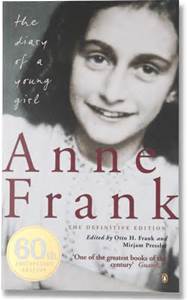
My Kyrosmagica Review of Anne Frank’s Diary

thEFGA3J1I

Goodreads Synopsis:

Anne Frank’s diaries have always been among the most moving and eloquent documents of the Holocaust. This new edition restores diary entries omitted from the original edition, revealing a new depth to Anne’s dreams, irritations, hardships, and passions. Anne emerges as more real, more human, and more vital than ever. If you’ve never read this remarkable autobiography, do so. If you have read it, you owe it to yourself to read it again.

Annelies Marie “Anne” Frank was a German-born Jewish girl from the city of Frankfurt, who wrote a diary while in hiding with her family and four friends in Amsterdam during the German occupation of the Netherlands in World War II.

She lived in Amsterdam with her parents and sister. During the Holocaust, Anne and her family hid in the attic of her father’s office to escape the Nazis. It was during that time period that she had recorded her life in her diary.

My review:

My first impressions of the diary. It surprised me. Anne Frank’s strength of personality, humour, and compassion, are deeply engrained into her moving words in The Diary of A Young Girl. In many ways she is a typical teenager discovering who she is. I was saddened by her poor relationship with her mother.  She experiences so many emotions and irritations, magnified in intensity due to the close nature, and length of time spent together hiding in the Annexe in Amsterdam.  These petty quarrels become even more evident as time progresses. It is hard to imagine how it would be possible to have even fleeting moments of happiness after being shut away from the world for such a long period of time, under such difficult  and dangerous circumstances, but Anne manages to do this and so much more besides. The enforced captivity of the Annexe allows her time to reflect on her shortcomings and she becomes more and more aware of her own faults and self limitations. Locked away in this alien environment, she grows up and her diary grows and blossoms with her.

There is a mounting sense of her frustrations, her fears for the future, guilt at hiding away, and above all else her deep passion for life. Her love of nature, writing and books comes across so vividly. In photographs Anne looks fragile, yet I think this young lady was anything but, from her words alone I get a sense of her strength of character. I was amused by her developing relationship with Peter, who is several years older than her. In effect she bypasses her older sister Margo and manages to steal Peter’s affections right from under Margo’s nose. Feisty indeed! Sadly Anne died just before the liberation, as did all of the other Annexe hideaways apart from Otto, her father. Her diary is so poignant because of the terrible, inevitable outcome. In light of this I found some of the passages in the diary very difficult to read, yet I kept on returning to  her diary as I sensed that I would be doing Anne’s memory a terrible disservice if I didn’t read it all. I found the final few words of the diary very sad indeed, her words became lighter, little glimmers of hope that sadly did not match the reality of her final days.

I shed some tears, wept for this promising teenager whose life was cut short in such a cruel way, robbed of her chance to live a full and enriching life. I can’t help but feel that Anne Frank would have had such a promising future if she had lived. I have no doubt that she would have become a writer. Moreover, some of the passages in the diary reminded me of my teenage self. I too kept a diary, but my diary was free to roam whereas Anne’s was constrained by her circumstances. I was so lucky, so blessed. In my diary I wrote about so many things that poor Anne never had the opportunity to see or experience. My father worked abroad and I kept a diary of our travels visiting him in diverse regions of the world, the Caribbean British Virgin Islands, Fiji, and Papua New Guinea, are a few that spring to mind.  I don’t know what became of my diary, (I was the same age as Anne),  it may be up in my parents’ house in Edinburgh. I hope one day I will find it. I feel so careless to have lost it. My teenage diary was a feeble affair in comparison to Anne’s. It makes me wonder whether we write best when we are challenged, when life isn’t easy. Do we need to experience suffering to write? It is an interesting question. I sense that we do to some extent, but not in the way that Anne did. Nobody should have to suffer like that.

Each of us should have a fundamental human right. A right to freedom, the right of every human being to live without fear of being judged or hated for the colour of their skin, their religion, their cultural heritage, or sexual orientation. A diary should be a personal affair,  not read, and discussed by a stranger. But in Anne’s case I am sure that her father Otto did the right thing in making Anne’s words available to all. I feel sure that Anne would be happy to know that her diary is being read, that a little piece of her lives on, albeit an edited version of her true words.  She longed to be a writer and in this she has succeeded. Her words are without doubt a snap shot in time, a representation of all the hopes and fears of all of those who suffered and died in the Holocaust.


DISCLAIMER: “As of 13th September 2017 we are a participant in the Amazon Services LLC Associates Program, an affiliate advertising program designed to provide a means for us to earn fees by linking to Amazon.com and affiliated sites.”  

My opinions are my own and any reviews on this site have not been swayed or altered in any way by monetary compensation, or by the offer of a free book in exchange for a review. 

Amazon UK Kindle: http://amzn.to/2y1ZX0g

Amazon UK Paperback: http://amzn.to/2ymqqBD

http://www.annefrank.org/