Review of The Exiled by William Meikle

theexiled

Goodreads Synopsis:

When several young girls are abducted from various locations in Edinburgh, Detective John Granger and his brother Alan, a reporter, investigate the cases from different directions. The abductor is cunning, always one step ahead, and the only clue he leaves behind at each scene are the brutalized corpses of black swans.

When the brothers’ investigations finally converge at a farmhouse in Central Scotland, they catch a glimpse of where the girls have been taken, a place both far away yet close enough to touch. A land known throughout Scottish history with many names: Faerie, Elfheim, and the Astral Plane. It is a place of legend and horror, a myth. But the brothers soon discover it’s real, and, to catch the abductor, they will have to cross over themselves.

To catch a killer, John and Alan Granger will have to battle the Cobbe, a strange and enigmatic creature that guards the realm, a creature of horrific power that demands a heavy price for entry into its world. The fate of both realms hangs in the balance…and time is running out…

My review of The Exiled, by William Meikle. This is an advanced readers copy that the author has kindly supplied to me via NetGalley. Publication date 1 July 2014.

My review:

The Exiles does much to recommend it. It combines a well crafted detective story, a serial killer thriller, and dark supernatural fantasy, in a work that is gripping and about as original as it gets. The story landscape is Edinburgh, what more could I ask for?The majority of my young adult life was spent in Edinburgh, and the way that William Meikle describes the city, and some of its less salubrious inhabitants and aspects, certainly brought the narrative to life. A large proportion of the detective, and investigative journalistic time was spent in watering holes, persuading half drunk Scotsmen to tell all! The two main characters are brothers, John is a detective inspector, and Alan a journalist with an uncanny ability to research leads. To begin with Meikle paints them as brothers who have grown apart, almost like separate entities, on two sides of the divide. The Macabre nature of the crime draws the two brothers together, in a quest to find and bring to justice the abductor of the missing girls. Meikle manages to interweave a tale that is at times, so dark, that a smattering of black humour, and drunken, humorous elements, are needed to lighten the heavy load. The book is most definitely a page-turner. The characters are realistically depicted. The stress and pressure put on detectives investigating terrible crimes such as these, is realistically portrayed. In fact, John can only seem to cope with the situation by resorting to chain-smoking. moreover, Meikle stereotypes the Scots’ drinking habits, by suggesting that a stiff drink is a prerequisite for all and sundry. Somehow, his realistic, colloquial, dialogue and well crafted scenes, allow him the license to get away with this. Very early on, it’s clear that this is not a novel for the faint-hearted. The darkness, and disturbing graphical images that Meikle paints may well haunt the reader. In light of this, I would not recommend this to younger readers. But, having said that, the darkness of the plot is lightened by the desperation of the two main characters to solve the mystery, and stop the advancing progress of evil. I’m impressed by Meikle’s imagination, and his ability to combine Fantasy with detective genre in such a convincing, and readable way. I would be interested in reading more of his work. I found The Exiled difficult to rate but decided on four stars, though for originality I think it would score a high-five!

Very highly recommended for readers of thriller, dark fantasy, horror.

My rating:

4 stars

imagesFA9DHJ69

ISBN no. 9781940544212 available on Dark Fuse. http://www.darkfuse.com/ and Amazon http://www.amazon.com/

William Meikle’s website: http://www.williammeikle.com/

Information from his website: He is a Scottish genre writer now living in Newfoundland. When he’s not writing Willie drinks beer, plays guitar and dreams of fortune and glory! He has 20 novels and several hundred short stories in genre presses, anthologies and magazines. His current top seller is the sci-fi novel THE INVASION with 20,000 copies sold and counting.

Have you read The Exiled? Do leave a comment below I’d love to hear from you.

Bye for now,

file

Marje @ Kyrosmagica xx

Generation Diary: Anne Frank Trust

1532142_10152083674026463_6137007760182361136_n

13-15 year olds, join in on this opportunity to create the world’s biggest digital diary.  https://www.facebook.com/annefranktrust


The Top Ten Novels of 2014 (So Far)

Thanks for this. Great list, from Read Her Like An Open Book.

Bill Wolfe's avatarREAD HER LIKE AN OPEN BOOK

As we near the halfway point of 2014, Top Ten Tuesday has asked book bloggers to share their ten favorite/best novels so far this year. Here are my favorites (listed alphabetically by author’s last name); I can’t honestly say they’re the “best” because there are so many novels I haven’t read.

(The hot links will take you to my recent reviews. I have also done interviews with Molly Antopol, Cara Hoffman, Laline Paull, and Mary Vensel White. My interview with Laura McBride is coming this week.)
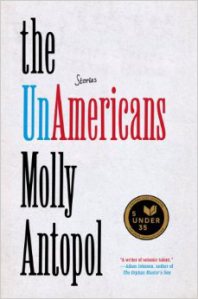
The UnAmericansThe UnAmericans — Molly Antopol (Feb. 3)
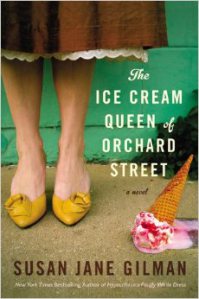
Ice Cream Queen of Orchard StreetThe Ice Cream Queen of Orchard Street* — Susan Jane Gilman (June 10)

Be Safe I Love YouBe Safe I Love You — Cara Hoffman (April 1)
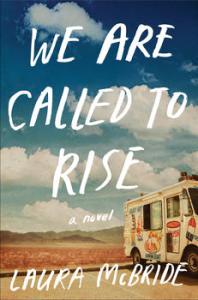
We Are Called to RiseWe Are Called to Rise — Laura McBride (June 3)

Everything I Never Told YouEverything I Never Told You* — Celeste Ng (June 26)

Boy, Snow, BirdBoy, Snow, Bird — Helen Oyeyemi (March 6)
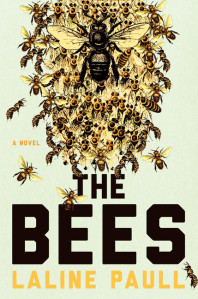
The BeesThe Bees

View original post 225 more words

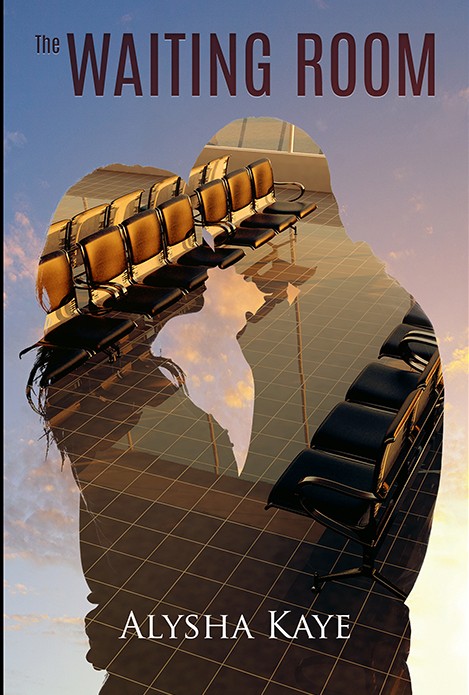
Book Review: The Waiting Room by Alysha Kaye

Another interesting sounding book, The Waiting Room, by Alysha Kaye, reviewed by Virna Aryanita.

virnaaryanita's avatar

The Waiting Room Print 03

Rate: 4 out of 5 stars. I loved, enjoyed it, and would love to recommend this to everyone!

First of all, can we talk about the cover? It’s so pretty and I love it.

I always thought the term “true love never dies” is bullshit. After all, nothing last forever because in the end we all are gonna die, right? But I never really thinking what happened after we all die? Where are we going next? Either straight to hell or heaven?

The Waiting Room follows Jude, who dies in a car accident, and find himself wake up in The Waiting Room, place where all the souls waiting to go on to their next life, except Jude. He spent his entire time there watching his wife Nina through a window, until one day he learns that he’s the only one who ever wait that long. How long will he stay?…

View original post 111 more words

RIVER OF DUST: a spiritual journey through unknown China for characters and readers alike

River of Dust, Virginina Pye, review courtesy of Read Her Like An Open Book. This sounds interesting.
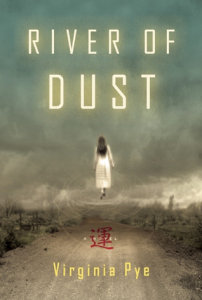
Bill Wolfe's avatarREAD HER LIKE AN OPEN BOOK

River of Dust

River of Dust

By Virginia Pye

Unbridled Books, 2013

Trade paperback published April 14, 2014

256 pages, $16.00

One of the great joys of the reading life is the ability to travel to other times and places, to experience life among other peoples and cultures. Virginia Pye’s River of Dust, though not a joyful novel, offers those pleasures in abundance. River of Dust is a character study of a man of great faith enduring a spiritual crisis, a close examination of the dynamics in a young marriage, a suspenseful missing persons story, and a jaundiced travelogue.

A few years after the Boxer Rebellion of 1898-1900, Reverend John Wesley Watson and his young wife, Grace, have been sent by the church to engage in missionary work in the small Chinese city of Fenchow-fu in the drought-stricken country northwest of Beijing. After making a name for himself building schools, roads, and…

View original post 511 more words

My Kyrosmagica Review of Lola and The Boy Next Door – Stephanie Perkins

51o8T9SqXAL__SL500_AA300_

Goodreads Synopsis:

Lola Nolan is a budding costume designer, and for her, the more outrageous, sparkly, and fun the outfit, the better. And everything is pretty perfect in her life (right down to her hot rocker boyfriend) until the Bell twins, Calliope and Cricket, return to the neighborhood. When Cricket, a gifted inventor, steps out from his twin sister’s shadow and back into Lola’s life, she must finally reconcile a lifetime of feelings for the boy next door.

My review:

An enchanting book. Stephanie Perkins creates wonderfully captivating characters. This book surprised me, I didn’t expect to enjoy it more than Anna and The French Kiss but I did. For all those teenage girls out there obsessed with fashion, and romance, this is the book for you. (My youngest daughter, would adore, ADORE, this book!)

Lola intends to go to her high school winter ball dressed as Marie Antoinette. Lola’s parents, two gay guys, Nathan, and Andy, worry about Lola going out with Max, her rocker boyfriend as he is so much older than her. Nathan and Andy’s devotion to Lola is touching. With the arrival of the Bell twins, Calliope, and Cricket, Lola’s old feelings for Cricket, her first love, are rekindled.

Lola is confused, by the arrival of Cricket, her emotions, seem to be as out of control as her over the top dress sense. Will she come to her senses? Will she discover the Lola within?

file

****BEWARE SPOILERS BELOW****

Cricket is so genuine and cute that Lola can’t stop herself falling for him all over again. Lola’s feelings for Max crumble and her confusion is relatable. It is a shock when she realises that Max is attracted to her child-like self. Lola is no longer willing to be a child. She is now a young woman, on the verge of discovering her identity. Will she go to the ball? She looks at herself in the mirror, and suddenly feels lost in her elaborate costume. Her wig is over the top, dwarfing her personality. Who is Lola? She despairs. Cricket comes to her rescue in the most wonderful way. He enables the Lola that he loves to go to the ball, and then proves that he is “the one,” by re-inventing her, and giving her the most beautiful gift that anyone could possibly imagine.

My rating:

4 stars

Find out more about Stephanie Perkins at http://stephanieperkins.com/books.html

Have you read Lola and The Boy Next Door? Do comment below I’d love to hear from you.

Bye for now,

file

Marje @ Kyrosmagica xx

My review of Daughter of Fortune by Isabel Allende

Daughter_of_Fortune

Goodreads Synopsis:

Orphaned at birth, Eliza Sommers is raised in the British colony of Valparaíso, Chile, by the well-intentioned Victorian spinster Miss Rose and her more rigid brother Jeremy. Just as she meets and falls in love with the wildly inappropriate Joaquín Andieta, a lowly clerk who works for Jeremy, gold is discovered in the hills of northern California. By 1849, Chileans of every stripe have fallen prey to feverish dreams of wealth. Joaquín takes off for San Francisco to seek his fortune, and Eliza, pregnant with his child, decides to follow him.

As we follow her spirited heroine on a perilous journey north in the hold of a ship to the rough-and-tumble world of San Francisco and northern California, we enter a world whose newly arrived inhabitants are driven mad by gold fever. A society of single men and prostitutes among whom Eliza moves–with the help of her good friend and savior, the Chinese doctor Tao Chien–California opens the door to a new life of freedom and independence for the young Chilean. Her search for the elusive Joaquín gradually turns into another kind of journey that transforms her over time, and what began as a search for love ends up as the conquest of personal freedom.

My Thoughts

At first I was a little unsure whether I would enjoy this book as it is not the usual genre that I read, but all my doubts were quickly swept away by Isabel Allende’s wonderful storytelling.

It is set in the British colony of Valpraiso, in 1840’s Chile and begins in a humorous way by telling us Eliza Sommers two talents: a sense of smell and a good memory. By the end of the book I discovered that Eliza’s character had grown so much that these two meager talents have increased tenfold.

If I have any criticisms of the novel they are few and far between. There were possibly times when I thought that some of the descriptions were slightly long but overall I didn’t find that this bothered me.

Overall I really enjoyed the book, I think in part due to the diverse characters, the cultural references and the skill of Allende’s writing.

file

*****BEWARE SOME SPOILERS BELOW*****

Eliza is an orphan who was found on the doorstep, raised by Miss Rose, a Victorian spinster with a hidden past, her starchy brother Jeremy, and an Indian servant, Mama Fresia.  Much to the family’s dismay she falls in love with Joaquín Andieta, an unsuitable young man from a poor family, with political ideals that are at odds with the state. Eliza without a thought to consequence, gives herself to this young man, drugging the household, so they will not hear their passionate lovemaking. She is disconsolate when she finds that he intends to go to California to make his fortune in gold. She can do nothing to stop him. He, like so many others is obsessed by the vision of gold, and wealth. Her lover takes off for San Francisco leaving her behind broken hearted. Eliza discovers that she is pregnant with his child, and decides that she has no other alternative left but to follow him.

Eliza hides in the hold of a ship bound for California. She becomes ill and is attended to by Tao, a Chinese doctor.  Tao began his sailor’s life after being shanghaied. He had been drinking to forget his sorrow at the sad death of his young, beautiful wife Lin. On board ship his wife’s delicate ghost comes to him when he is administering to Eliza and berates him for not doing his utmost to save her. He is so distressed by this ghostly vision of his wife that he does everything in his power to help Eliza. Eliza has a miscarriage but survives and escapes from the ship dressed in male clothing. She continues to pretend that she is male to blend in and safeguard her safety. In this land driven crazy by gold fever, single men and prostitutes make up the population. She has no wish to become a prostitute so she chooses to adopt a masculine persona.  In this new world she finds freedom from the restraints of her life as a woman living in a British household in Chile.

Daughter of Fortune has several strengths, Isabel Allende’s characterisation is excellent, I particularly enjoyed her portrayal of several female characters:  Miss Rose, even though she is constrained by female niceties knows how to get what she wants. Paulina manipulates her husband to get her own bank account and eventually buys a steam ship and becomes a wealthy business woman. Though Tao’s wife Lin is described as being weak her ghost manages to find him across the vast expanse of ocean and convinces him to help Eliza.

I also really enjoyed how Allende played with her characters: the intimidating giant Babula the Bad is really a good guy, with a soft side.  In Eliza’s case this transformation is even more marked, as if she is rediscovering herself in stages as the adventure unfolds. She pretends to be a deaf-mute Chinese boy and then the brother of her Chilean lover, and finally she rediscovers her female identity, but this female is no longer chained by layers of corsetry but free to be herself.

Also Tao’s character transforms from his humble start as fourth son to respected Chinese doctor. He learns that his delicate young wife with golden lilies for feet only brings him a fleeting happiness, cut short by her early death, whereas Eliza with her big feet and sturdy body will give him many years of companionship and love.

DISCLAIMER: “As of 13th September 2017 we are a participant in the Amazon Services LLC Associates Program, an affiliate advertising program designed to provide a means for us to earn fees by linking to Amazon.com and affiliated sites.”  

My opinions are my own and any reviews on this site have not been swayed or altered in any way by monetary compensation, or by the offer of a free book in exchange for a review. 

Buying Link:

Kindle Amazon UK: http://amzn.to/2jE5IdT

Paperback Amazon UK: http://amzn.to/2f5PDsA

Audio CD Amazon UK: http://amzn.to/2y8MIH2


My rating:

*4.5 stars*

Bye for now.

file

Marje @ Kyrosmagica xx

There are passages in the novel that are gut wrenchingly sad, but there is also a sense that life is a journey of discovery, with many possibilities open to us.

Find out more about the author at http://isabelallende.com

Characterisation: The Bedrock Of Any Novel

In the Futurelearn Start Writing Fiction course we looked at Josip Novakovich’s methods of Characterisation:

Here is my summary of Novakovich’s methods:

teacher-359311_150


This looks a bit like me, with my glasses on! Except no grey hair yet, well none I’m admitting to!

All the quotes I have taken as examples are from Hiromi Kawakami’s excellent book, Strange Weather in Tokyo which I have recently reviewed and given five stars.

Summary – In this method tell us what your characters are like and what they like doing using the 3rd person. The advantage of this method is simplicity and readability. The disadvantage is a tendency to tell rather than show. No dramatic action or dialogue takes place.

His full name was Mr Harutsana Matsumoto, but I called him ‘Sensei’. Not ‘Mr’ or ‘Sir’, just ‘Sensei’.
He was my Japanese teacher at secondary school He wasn’t my form teacher, and Japanese didn’t interest me much, so I didn’t really remember him. Since I finished school, I haven’t seen him for quite a while.

From this opening summary Hiromi Kawakami swiftly, and expertly, takes the reader into a scene at a crowded bar, with dialogue between the two main characters of the novel, Tsukiko and Sensei.

Repeated action or habit. This is a people watching exercise. What do your characters do? Have they any unconscious habits, or actions? The advantage of this method is that it saves time. The disadvantage is that it delays entry into dramatic scenes.

Sensei had always held an eraser in his hand when writing on the blackboard.

Sensei did not like anyone to pour his drinks for him. Whether it was beer or sake, he meticulously poured for himself.

Self portrait – Introducing him or herself. Can be achieved directly or indirectly. Works better if the words create a picture of the character or create some drama.

Here is Tsukiko’s self-portrait:

I, on the other hand, still might be considered a proper adult. I had been very grown-up when I was in primary school. But as I continued through secondary school, I in fact became less grown-up. And then as the years passed, I turned into quite a childlike person. I suppose I just wasn’t able to ally myself to time.

This short paragraph tells us so much about Tsukiko.

Sensei tells us about himself in a lengthy story about his wife and son and himself going hiking.

It is interesting how Hiromi Kawakami uses the differing self portraits of the two characters, to suggest the disparity in their ages, the younger of the two, Tsuikiko’s is short and to the point, and Sensei’s is long-winded and rambling.

Appearance – We can learn an awful lot about a character from appearance. I liked Novakovich’s tip about hands. Hands can be used to great effect or even feet or the way a person walks. Writing captures motion well. Again careful choice of words seems to be the key.

Descriptions of Sensei’s appearance:

His white hair was carefully smoothed back, and he was wearing a starched white shirt with a grey waistcoat.

He wore a tweed suit with leather shoes. His suit looked old but well-tailored.

When he was chewing his mouth was that of an old man.

Details about Sensei’s gait:

Sensei held his umbrella straight up and started walking. I could sense from his gait the tacit but full expectation that I would follow him.

Scene – Set your character in motion, combining appearance, action and dialogue. Advantage of this method. The reader is with you visualising and experiencing the scene. Most lifelike. The disadvantage: it is difficult to include back story, there are only so many flash backs, and memories that you can interweave into plot.

‘These elms are so verdant, aren’t they?’ Sensai said, looking up at the trees beside the bus stop. He was right – dense with leaves, the branches of the elms waved in the breeze. Although the wind was light, high in the sky, the tops of the elms swayed even more grandly.
It was a hot summer day, but the low humidity kept it cool in the shade. We took the bus to Teramachi and then walked a little. Sensei was wearing a panama hat and a Hawaiian shirt in muted colours.


owl-158411_150

Combining techniques: Combine two or more of the above techniques, making the characters development incremental.

The advice to combine techniques is excellent, the sound of a character’s voice, and sensory details can also create a powerful image:

It was only his voice that I remembered from the beginning. He had a resonant voice with a somewhat high timber, but it was rich with overtones. A voice that emanated from the boundless presence by my side at the counter.

At some point, sitting beside Sensei, I began to notice the heat that radiated from his body. Through his starched shirt, there came a sense of Sensei. A feeling of nostalgia. This sense of Sensei retained the shape of him. It was dignified, yet tender, like Sensei. Even now, I could never quite get a hold on it – I would try to capture it, but the sense escaped me. Just when I thought it was gone, though, it would sneak back up on me…Wasn’t a sensation just that kind of indistinct notion that slips away, no matter how you try to contain it

Author’s bio on Goodreads:

Josip Novakovich (Croatian: Novaković) is a Croatian-American writer. His grandparents had immigrated from the Croatia, then part of the Austro-Hungarian Empire, to Cleveland, Ohio, and, after the First World War, his grandfather returned to what had become Yugoslavia. Josip Novakovich was born (in 1956) and grew up in the Central Croatian town of Daruvar, studied medicine in the northern Serbian city of Novi Sad. At the age of 20 he left Yugoslavia, continuing his education at Vassar College (B.A.), Yale University (M.Div.), and the University of Texas, Austin (M.A.).

He has published a novel (April Fool’s Day), three short story collections (Yolk, Salvation and Other Disasters, Infidelities: Stories of War and Lust), two collections of narrative essays (Apricots from Chernobyl, Plum Brandy: Croatian Journey) and a textbook (Fiction Writer’s Workshop).

Novakovich has taught at Nebraska Indian Community College, Bard College, Moorhead State University, Antioch University in Los Angeles, the University of Cincinnati, and is now a professor at Pennsylvania State University.

Mr. Novakovich is the recipient of the Whiting Writer’s Award, a Guggenheim fellowship, two fellowships from the National Endowment of the Arts, an award from the Ingram Merrill Foundation, and an American Book Award from the Before Columbus Foundation. He was anthologized in Best American Poetry, Pushcart Prize, and O.Henry Prize Stories.

He taught in the Master’s of Fine Arts program at Pennsylvania State University, where he lived under the iron rule of Reed Moyer’s Halfmoon Township autocracy. He is currently in Montreal, Quebec teaching at Concordia University.

His book Fiction Writer’s Workshop, may be of interest: .

ISBN 1884910394 (ISBN13: 9781884910395)

As might Marakumi’s excellent novel:

Strange Weather in Tokyo Hiromi Kawakami http://www.portobellobooks.com

ISBN 9781846275104

Photos – http://Pixabay.com