
Useful post about keeping the blogging party going!
Category: Writing and Blogging

Characterisation: The Bedrock Of Any Novel
In the Futurelearn Start Writing Fiction course we looked at Josip Novakovich’s methods of Characterisation:
Here is my summary of Novakovich’s methods:

This looks a bit like me, with my glasses on! Except no grey hair yet, well none I’m admitting to!
All the quotes I have taken as examples are from Hiromi Kawakami’s excellent book, Strange Weather in Tokyo which I have recently reviewed and given five stars.
Summary – In this method tell us what your characters are like and what they like doing using the 3rd person. The advantage of this method is simplicity and readability. The disadvantage is a tendency to tell rather than show. No dramatic action or dialogue takes place.
His full name was Mr Harutsana Matsumoto, but I called him ‘Sensei’. Not ‘Mr’ or ‘Sir’, just ‘Sensei’.
He was my Japanese teacher at secondary school He wasn’t my form teacher, and Japanese didn’t interest me much, so I didn’t really remember him. Since I finished school, I haven’t seen him for quite a while.
From this opening summary Hiromi Kawakami swiftly, and expertly, takes the reader into a scene at a crowded bar, with dialogue between the two main characters of the novel, Tsukiko and Sensei.
Repeated action or habit. This is a people watching exercise. What do your characters do? Have they any unconscious habits, or actions? The advantage of this method is that it saves time. The disadvantage is that it delays entry into dramatic scenes.
Sensei had always held an eraser in his hand when writing on the blackboard.
Sensei did not like anyone to pour his drinks for him. Whether it was beer or sake, he meticulously poured for himself.
Self portrait – Introducing him or herself. Can be achieved directly or indirectly. Works better if the words create a picture of the character or create some drama.
Here is Tsukiko’s self-portrait:
I, on the other hand, still might be considered a proper adult. I had been very grown-up when I was in primary school. But as I continued through secondary school, I in fact became less grown-up. And then as the years passed, I turned into quite a childlike person. I suppose I just wasn’t able to ally myself to time.
This short paragraph tells us so much about Tsukiko.
Sensei tells us about himself in a lengthy story about his wife and son and himself going hiking.
It is interesting how Hiromi Kawakami uses the differing self portraits of the two characters, to suggest the disparity in their ages, the younger of the two, Tsuikiko’s is short and to the point, and Sensei’s is long-winded and rambling.
Appearance – We can learn an awful lot about a character from appearance. I liked Novakovich’s tip about hands. Hands can be used to great effect or even feet or the way a person walks. Writing captures motion well. Again careful choice of words seems to be the key.
Descriptions of Sensei’s appearance:
His white hair was carefully smoothed back, and he was wearing a starched white shirt with a grey waistcoat.
He wore a tweed suit with leather shoes. His suit looked old but well-tailored.
When he was chewing his mouth was that of an old man.
Details about Sensei’s gait:
Sensei held his umbrella straight up and started walking. I could sense from his gait the tacit but full expectation that I would follow him.
Scene – Set your character in motion, combining appearance, action and dialogue. Advantage of this method. The reader is with you visualising and experiencing the scene. Most lifelike. The disadvantage: it is difficult to include back story, there are only so many flash backs, and memories that you can interweave into plot.
‘These elms are so verdant, aren’t they?’ Sensai said, looking up at the trees beside the bus stop. He was right – dense with leaves, the branches of the elms waved in the breeze. Although the wind was light, high in the sky, the tops of the elms swayed even more grandly.
It was a hot summer day, but the low humidity kept it cool in the shade. We took the bus to Teramachi and then walked a little. Sensei was wearing a panama hat and a Hawaiian shirt in muted colours.

Combining techniques: Combine two or more of the above techniques, making the characters development incremental.
The advice to combine techniques is excellent, the sound of a character’s voice, and sensory details can also create a powerful image:
It was only his voice that I remembered from the beginning. He had a resonant voice with a somewhat high timber, but it was rich with overtones. A voice that emanated from the boundless presence by my side at the counter.
At some point, sitting beside Sensei, I began to notice the heat that radiated from his body. Through his starched shirt, there came a sense of Sensei. A feeling of nostalgia. This sense of Sensei retained the shape of him. It was dignified, yet tender, like Sensei. Even now, I could never quite get a hold on it – I would try to capture it, but the sense escaped me. Just when I thought it was gone, though, it would sneak back up on me…Wasn’t a sensation just that kind of indistinct notion that slips away, no matter how you try to contain it
Author’s bio on Goodreads:
Josip Novakovich (Croatian: Novaković) is a Croatian-American writer. His grandparents had immigrated from the Croatia, then part of the Austro-Hungarian Empire, to Cleveland, Ohio, and, after the First World War, his grandfather returned to what had become Yugoslavia. Josip Novakovich was born (in 1956) and grew up in the Central Croatian town of Daruvar, studied medicine in the northern Serbian city of Novi Sad. At the age of 20 he left Yugoslavia, continuing his education at Vassar College (B.A.), Yale University (M.Div.), and the University of Texas, Austin (M.A.).
He has published a novel (April Fool’s Day), three short story collections (Yolk, Salvation and Other Disasters, Infidelities: Stories of War and Lust), two collections of narrative essays (Apricots from Chernobyl, Plum Brandy: Croatian Journey) and a textbook (Fiction Writer’s Workshop).
Novakovich has taught at Nebraska Indian Community College, Bard College, Moorhead State University, Antioch University in Los Angeles, the University of Cincinnati, and is now a professor at Pennsylvania State University.
Mr. Novakovich is the recipient of the Whiting Writer’s Award, a Guggenheim fellowship, two fellowships from the National Endowment of the Arts, an award from the Ingram Merrill Foundation, and an American Book Award from the Before Columbus Foundation. He was anthologized in Best American Poetry, Pushcart Prize, and O.Henry Prize Stories.
He taught in the Master’s of Fine Arts program at Pennsylvania State University, where he lived under the iron rule of Reed Moyer’s Halfmoon Township autocracy. He is currently in Montreal, Quebec teaching at Concordia University.
His book Fiction Writer’s Workshop, may be of interest: .
ISBN 1884910394 (ISBN13: 9781884910395)
As might Marakumi’s excellent novel:
Strange Weather in Tokyo Hiromi Kawakami http://www.portobellobooks.com
ISBN 9781846275104
Photos – http://Pixabay.com
Share this:

What’s Up Wednesday
What’s up Wednesday, a lovely idea, by Jaime Morrow and Erin Funk on Victoria Davenports blog, to connect bloggers.


What’s Up Wednesday is a weekly blog hop created by Jaime Morrow and Erin Funk, to help connect writers on this writing journey. If you’d like to join us, check out the blogs each week, get to know some of the other writers taking part, and spread some writerly love!
What I’m Reading

The Park Service by Ryan Winfield (Park Service Trilogy #1). I totally happened on this book by accident, I was actually reading another book when I found it and downloaded a sample on my kindle. This book is a perfect example of two things you’re normally not supposed to do (prologue, and opening with MC waking up) and doing them so well it blew my mind (a further blog post to follow regarding rules and how to break them). I was so hooked by the end of the prologue, I put away the other book and haven’t been able…
View original post 534 more words
Share this:


Word Count Meters and Tight Writing Resources
Word count meters and resources for writers. Why not?
Share this:

Why Beta Readers Make Books Better
Beta readers. Authors information.

That tongue-twister heralds news of my new flash fiction collection, Quick Change, due for launch later this month.
 Due for launch as an ebook on 21 June 2014
It’s a nerve-wracking time for any author when their precious manuscript is packed off for final editing and proofreading before publication. This week that’s what’s happening to Quick Change, the collection of flash fiction that I’ll be publishing as an ebook later this month. By the power of the internet, the final draft has zoomed across the ether to the other side of the country, for my editor Alison Jack to give it her expert treatment.
Last week it was the turn of the beta readers to read an earlier version of my manuscript. No, that doesn’t mean I’ve written my book in Greek.
What Are Beta Readers Anyway?
Beta readers are volunteers who read a manuscript prior to publication…
View original post 436 more words
Share this:

Writer’s journey – How did it all happen?
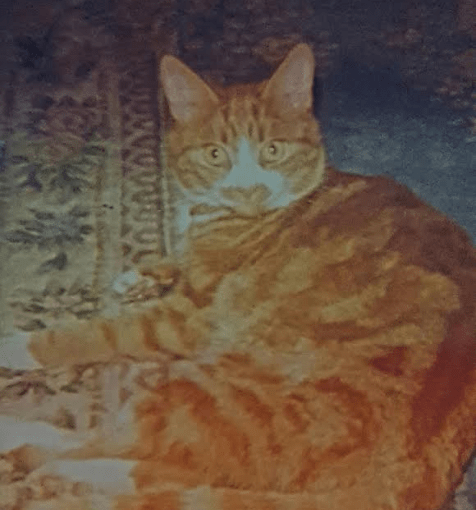
Well how did I start writing? It was quite odd really. I used to write as a teenager. At the time I had a ginger tom cat called Chester, Mr. Popularity, everyone loved him. He liked to venture afar and we would often have to rescue him. I remember one occasion in particular, my brother and I ended up trudging through the woods, in Blackhall in Edinburgh, to pick him up from a house in the vicinity. He ended up at the most peculiar places. One time he chose to visit a house with thirteen cats! He is a tom cat with attitude!
I told you he liked company. So it seemed natural to write about cats, and I kept a diary. My dad was and still is one of my other great sources of inspiration. He has travelled extensively to the Far East, and Middle East and is a wonderful raconteur.
As far as my writing is concerned the inevitable happened. I was the typical teenager. I got distracted. I found boys, discos, parties, and my writing suffered. Somehow I didn’t pick it up again for a very long time. This is a regret. A massive regret. But what can I do? I can’t travel back in time, I don’t have a Tardis. So I just have to accept that the time is right now. You see, I’m still this young girl at heart, just stuck in an older and maybe wiser body. I have experienced more, travelled more, lived more, so hopefully that will make me a better writer.
Several events came together to ignite my desire to write again. First of all I read a lot. At the time I was reading Dorian Gray and it was definitely a novel that captured my imagination and set my mind free. Also my eldest daughter was studying GCSE Art and I took a sudden interest in art and photography. I’m not saying that I can paint or draw, though I wish I could. No, I enjoyed watching her artistic development and I enjoyed sharing ideas with her and encouraging her.
All of these influences helped me to write my first book, a children’s/YA fantasy set in Cambridge, which I have now published. The female protagonist in my novel is a teenage girl who paints a puzzle of art. But it is by no means a novel simply about Art. She expresses her sadness, and discovers her magical powers, through the medium of painting and via crystals and well the rest you will find out when you read the book. Let’s just say that a lot happens and I think that it will keep you entertained! Well I hope so anyway.
Also I know this sounds crazy but my other source of inspiration was a black cat, a throw back to Chester. I had never seen this strange black cat before and suddenly he just started appearing in our garden. There was something different about him. He appeared like a miniature panther, all glossy and splendid, looking for attention, with his mesmerising eyes, I fell under his spell. He liked to show off, he would disappear into thin air, climb to ridiculous heights, or chase his tail around the garden like a demented clown. He just had to play a part in this book too. Lets just say he has a subsidiary part to a main character, who is male, young and very interesting too, just like him. That was the beginning. Looking back I am amazed that from just a few initial thoughts my idea just seemed to grow and grow. Now my debut novel is nearly ready for the final edit. How did that happen? I couldn’t be happier in fact if I had a tail, I’m sure I would be whizzing around and around chasing it with excitement!
Update: I released my first book The Curse of Time Book 1 Bloodstone in August 26th 2017 in kindle form via Amazon. The paperback is now released too. This has since been updated and republished by Next Chapter Publishing.
Unique Selling Point: Unique, Imaginative, ‘Charming, enchanting and richly layered this is purely delightful.’
“This delightful book will appeal to teens and young adults who love stories filled with magical crystals, dark family curses, and mysteries waiting to be solved around every corner. Each chapter leads you on a journey of discovery where Amelina earns the right to use three wizard stones to reset the balance of time and finally break the curse that holds her family hostage. A captivating tale!” – Colleen M. Chesebro (Editor)
Bye for now, xxxxx
M J Mallon Author – The Curse of Time – Book 1 Bloodstone
My links:
Authors Website: https://kyrosmagica.wordpress.com
Twitter: @Marjorie_Mallon and @curseof_time
Founder of Facebook – #ABRSC Authors/Bloggers Support Group:
https://www.facebook.com/groups/1829166787333493/
Goodreads: https://www.goodreads.com/author/show/17064826.M_J_Mallon
Facebook: https://www.facebook.com/mjmallonauthor/
Instagram: https://www.instagram.com/mjmallonauthor/
Tumblr: http://mjmallonauthor.tumblr.com/

 M J Mallon YA Author and Poet