Characterisation: The Bedrock Of Any Novel

In the Futurelearn Start Writing Fiction course we looked at Josip Novakovich’s methods of Characterisation:

Here is my summary of Novakovich’s methods:

teacher-359311_150


This looks a bit like me, with my glasses on! Except no grey hair yet, well none I’m admitting to!

All the quotes I have taken as examples are from Hiromi Kawakami’s excellent book, Strange Weather in Tokyo which I have recently reviewed and given five stars.

Summary – In this method tell us what your characters are like and what they like doing using the 3rd person. The advantage of this method is simplicity and readability. The disadvantage is a tendency to tell rather than show. No dramatic action or dialogue takes place.

His full name was Mr Harutsana Matsumoto, but I called him ‘Sensei’. Not ‘Mr’ or ‘Sir’, just ‘Sensei’.
He was my Japanese teacher at secondary school He wasn’t my form teacher, and Japanese didn’t interest me much, so I didn’t really remember him. Since I finished school, I haven’t seen him for quite a while.

From this opening summary Hiromi Kawakami swiftly, and expertly, takes the reader into a scene at a crowded bar, with dialogue between the two main characters of the novel, Tsukiko and Sensei.

Repeated action or habit. This is a people watching exercise. What do your characters do? Have they any unconscious habits, or actions? The advantage of this method is that it saves time. The disadvantage is that it delays entry into dramatic scenes.

Sensei had always held an eraser in his hand when writing on the blackboard.

Sensei did not like anyone to pour his drinks for him. Whether it was beer or sake, he meticulously poured for himself.

Self portrait – Introducing him or herself. Can be achieved directly or indirectly. Works better if the words create a picture of the character or create some drama.

Here is Tsukiko’s self-portrait:

I, on the other hand, still might be considered a proper adult. I had been very grown-up when I was in primary school. But as I continued through secondary school, I in fact became less grown-up. And then as the years passed, I turned into quite a childlike person. I suppose I just wasn’t able to ally myself to time.

This short paragraph tells us so much about Tsukiko.

Sensei tells us about himself in a lengthy story about his wife and son and himself going hiking.

It is interesting how Hiromi Kawakami uses the differing self portraits of the two characters, to suggest the disparity in their ages, the younger of the two, Tsuikiko’s is short and to the point, and Sensei’s is long-winded and rambling.

Appearance – We can learn an awful lot about a character from appearance. I liked Novakovich’s tip about hands. Hands can be used to great effect or even feet or the way a person walks. Writing captures motion well. Again careful choice of words seems to be the key.

Descriptions of Sensei’s appearance:

His white hair was carefully smoothed back, and he was wearing a starched white shirt with a grey waistcoat.

He wore a tweed suit with leather shoes. His suit looked old but well-tailored.

When he was chewing his mouth was that of an old man.

Details about Sensei’s gait:

Sensei held his umbrella straight up and started walking. I could sense from his gait the tacit but full expectation that I would follow him.

Scene – Set your character in motion, combining appearance, action and dialogue. Advantage of this method. The reader is with you visualising and experiencing the scene. Most lifelike. The disadvantage: it is difficult to include back story, there are only so many flash backs, and memories that you can interweave into plot.

‘These elms are so verdant, aren’t they?’ Sensai said, looking up at the trees beside the bus stop. He was right – dense with leaves, the branches of the elms waved in the breeze. Although the wind was light, high in the sky, the tops of the elms swayed even more grandly.
It was a hot summer day, but the low humidity kept it cool in the shade. We took the bus to Teramachi and then walked a little. Sensei was wearing a panama hat and a Hawaiian shirt in muted colours.

 

owl-158411_150

Combining techniques: Combine two or more of the above techniques, making the characters development incremental.

The advice to combine techniques is excellent, the sound of a character’s voice, and sensory details can also create a powerful image:

It was only his voice that I remembered from the beginning. He had a resonant voice with a somewhat high timber, but it was rich with overtones. A voice that emanated from the boundless presence by my side at the counter.

At some point, sitting beside Sensei, I began to notice the heat that radiated from his body. Through his starched shirt, there came a sense of Sensei. A feeling of nostalgia. This sense of Sensei retained the shape of him. It was dignified, yet tender, like Sensei. Even now, I could never quite get a hold on it – I would try to capture it, but the sense escaped me. Just when I thought it was gone, though, it would sneak back up on me…Wasn’t a sensation just that kind of indistinct notion that slips away, no matter how you try to contain it

Author’s bio on Goodreads:

Josip Novakovich (Croatian: Novaković) is a Croatian-American writer. His grandparents had immigrated from the Croatia, then part of the Austro-Hungarian Empire, to Cleveland, Ohio, and, after the First World War, his grandfather returned to what had become Yugoslavia. Josip Novakovich was born (in 1956) and grew up in the Central Croatian town of Daruvar, studied medicine in the northern Serbian city of Novi Sad. At the age of 20 he left Yugoslavia, continuing his education at Vassar College (B.A.), Yale University (M.Div.), and the University of Texas, Austin (M.A.).

He has published a novel (April Fool’s Day), three short story collections (Yolk, Salvation and Other Disasters, Infidelities: Stories of War and Lust), two collections of narrative essays (Apricots from Chernobyl, Plum Brandy: Croatian Journey) and a textbook (Fiction Writer’s Workshop).

Novakovich has taught at Nebraska Indian Community College, Bard College, Moorhead State University, Antioch University in Los Angeles, the University of Cincinnati, and is now a professor at Pennsylvania State University.

Mr. Novakovich is the recipient of the Whiting Writer’s Award, a Guggenheim fellowship, two fellowships from the National Endowment of the Arts, an award from the Ingram Merrill Foundation, and an American Book Award from the Before Columbus Foundation. He was anthologized in Best American Poetry, Pushcart Prize, and O.Henry Prize Stories.

He taught in the Master’s of Fine Arts program at Pennsylvania State University, where he lived under the iron rule of Reed Moyer’s Halfmoon Township autocracy. He is currently in Montreal, Quebec teaching at Concordia University.

His book Fiction Writer’s Workshop, may be of interest: .

ISBN 1884910394 (ISBN13: 9781884910395)

As might Marakumi’s excellent novel:

Strange Weather in Tokyo Hiromi Kawakami http://www.portobellobooks.com

ISBN 9781846275104

Photos – http://Pixabay.com

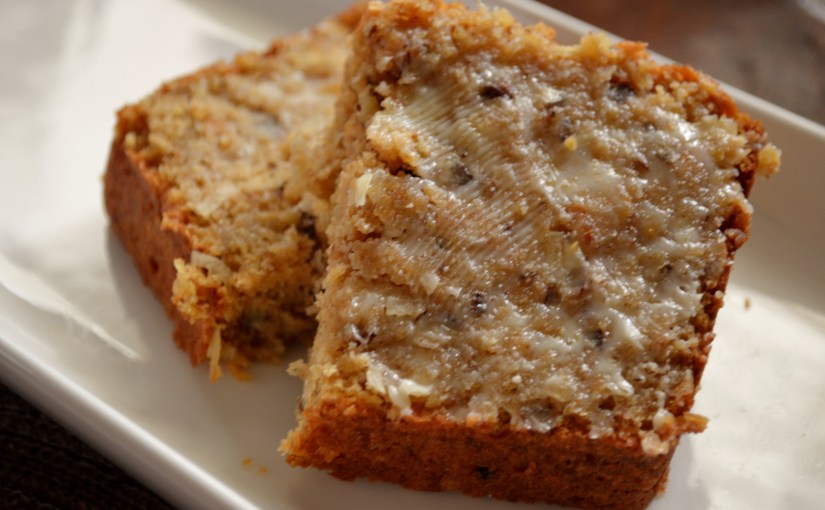
Cantaloupe & Coconut Bread

Sounds yummmmmy!

Jess's avatartherapy bread

I have never been a very big fan of cantaloupe, or melons for that matter. Watermelons are cool with me but anything much past that is just too “musky” for my liking. Try and try again, eating melon balls or cantaloupe halves just makes me cringe a bit.

So why the heck did I make cantaloupe bread?

DSC_0347

Two reasons really:

1) I am still trying to force myself to like it…

2) This is the actual catalyst to the situation: my neighbor recently went out of town for about a week and I was charged with watching her two crazy kitties. Before she left she said, “Jess there is some spinach and a cantaloupe in the fridge, please eat them while I’m gone because I’m sure they won’t be good when I get back”. Cantaloupe. Dun, dun dun… I told her I wasn’t a big fan. She said to try…

View original post 531 more words

Sakura Festival ~ By Jormungand

Exquisite. Sakura Festival – By Jormungand

digger666's avatardigger666

View original post

My Kyrosmagica Review of Strange Weather in Tokyo by Hiromi Kawakami

strange-weather_LR

Goodreads Synopsis:

Tsukiko is in her late 30s and living alone when one night she happens to meet one of her former high school teachers, ‘Sensei’, in a bar. He is at least thirty years her senior, retired and, she presumes, a widower. After this initial encounter, the pair continue to meet occasionally to share food and drink sake, and as the seasons pass – from spring cherry blossom to autumnal mushrooms – Tsukiko and Sensei come to develop a hesitant intimacy which tilts awkwardly and poignantly into love.

Perfectly constructed, funny, and moving, Strange Weather in Tokyo is a tale of modern Japan and old-fashioned romance.

My review:

I’m a huge fan of Japanese literature and Strange Weather in Tokyo didn’t disappoint. I just loved its quirkiness. Hiromi Kawakami’s writing style has a strange, earthiness, that quietly draws us in. The writing is stark and simplistic portraying Tsuikiko’s loneliness and the growing emotions that slowly develop between the pair of main characters.

Lonely Tsukiko, a woman fast approaching forty, lives alone. One evening she meets a former high school teacher, ‘Sensei’, at a bar. The pair begin an unusual friendship, meeting  by chance at a local bar. He is  an elderly, retired gentleman, who is  full of vigour. She assumes that he is a widower. Delicate details of his character keep us guessing. He carries a briefcase around with him, wears a tweed suit, and leather shoes, even when he goes hiking!

The odd couple continues to meet up, and share food and drink sake. The plentiful Japanese food references will keep foodies like me in rapture.

Sensei’s thoughts on tofu: “Tofu is quite special…it’s good warm. It’s good chilled. It’s good boiled. It’s good fried. It’s versatile.”

“It was sort of like an octopus version of shabu-shabu. Thin, almost-transparent slices of octopus were submerged in a gently boiling pot of water, and them immediately plucked out with chopsticks when they rose to the surface. Dipped in ponzu sauce, the sweetness of the octopus melted in your mouth with the ponzu’s citrus aroma, creating a flavour that was quite sublime. ”

You can just taste the octopus!

We discover little snippets of information about Sensei’s past, his wife’s abandonment of him and their son. In time,  Tsukiko realises that when she’s not with him, she misses him, and wonders how she managed to be happy before. This slow developing almost dream-like sense of their growing feelings for each other slowly develops into love, despite the difficulties associated with a large age gap. The author depicts Tsukiko, in a child like fashion. So in a sense the teacher, student aspect of their relationship still remains. Though Sensei, seems fitter than her! This is amusingly related in the mushroom hunting chapters. The novel is interlaced with a delicate humour, and a sweet sense of sadness, as the couple come to terms with the inevitability of life.

“At some point, sitting beside Sensei, I began to notice the heat that radiated from his body. Through his starched shirt, there came a sense of Sensei. A feeling of nostalgia. This sense of Sensei retained the shape of him. It was dignified, yet tender, like Sensei. Even now, I could never quite get a hold on it – I would try to capture it, but the sense escaped me. Just when I thought it was gone, though, it would sneak back up on me…Wasn’t a sensation just that kind of indistinct notion that slips away, no matter how you try to contain it?”

My rating:

5 stars!!!

5_stars_clipart

About the author

Kawakamki is one of Japan’s most popular contemporary novelists. Strange Weather in Toyko won the Taniziki prize in 2001, and was shortlisted for the Man Asian Literary Prize in 2013.
.
Strange Weather in Tokyo
By Hiromi Kawakami, 2013
Translated by Allison Markin Powell
Portobello Books www.portobellobooks.com

This is one of the summer reads suggested by the Writers’ Centre Norwich, and the Library Services in Norfolk, Suffolk and Cambridgeshire, UK. www.summerreads.org.uk

Amazing cover art deserves a mention: http://yowayowacamera.com/

Strange-Weather-in-Tokyo-Image-by-Yowayowa-Camera-Woman1-640x361

Have you read Strange Weather in Tokyo? Do leave a comment below I’d love to hear from you.

Bye for now,
file
Marje @ Kyrosmagica xx

What’s Up Wednesday

What’s up Wednesday, a lovely idea, by Jaime Morrow and Erin Funk on Victoria Davenports blog, to connect bloggers.

Victoria Davenport's avatarCoffee. Write. Repeat.

Image

What’s Up Wednesday is a weekly blog hop created by Jaime Morrow and Erin Funk, to help connect writers on this writing journey. If you’d like to join us, check out the blogs each week, get to know some of the other writers taking part, and spread some writerly love! 

What I’m Reading

Image

The Park Service by Ryan Winfield (Park Service Trilogy #1). I totally happened on this book by accident, I was actually reading another book when I found it and downloaded a sample on my kindle. This book is a perfect example of two things you’re normally not supposed to do (prologue, and opening with MC waking up) and doing them so well it blew my mind (a further blog post to follow regarding rules and how to break them). I was so hooked by the end of the prologue, I put away the other book and haven’t been able…

View original post 534 more words

Waiting – Give it up Before It’s Too Late

images (4)

Waiting in queues. Waiting in supermarkets. Waiting in garages. Waiting at the doctors. The list could just go on and on, so I won’t bore you with any more detail. Let’s get to the point – How much of our life do we waste waiting? We spend an amazing amount of time sleeping, a third of our lives, but has anyone documented how much time we spend waiting? It’s not so much the waiting that gets to me, it’s the attitude of certain people who behave as if they own the right to make me wait longer. I’m a patient kind of girl but sometimes it gets to you. You’re waiting in line and the person in front of you decides to empty out their handbag spilling a year’s worth of money off coupons at the checkout. They haven’t bothered to see if they’re valid or not, so the checkout girl has to check each and every coupon. By the time they’ve left, the check out girl and I are in cahoots, talking about their inconsiderate behaviour. Wouldn’t you?

We spend five and a half years doing the housework. (This one really upsets me! I take advice from the fellow below on that one!

images (5)

Three years doing our washing. Eleven years in front of the tv. Five years on the Net. Seven years suffering from insomnia. 20 weeks on hold. 38,003hrs eating. Six months of our life queuing. Eleven and a half years at work. A year off sick (no wonder!) 160 days on fag breaks. Five months complaining! It’s amazing we have any time left over to relax or enjoy ourselves.

That leads me to the next statistics, which are a bit risqué, so forgive me, here goes, women spend 1 hour and 24 minutes having orgasms (the female orgasm lasts 1.7 seconds) and men a whopping 9 hours 18 secs. (the male orgasm lasts 12.4 seconds.) Sounds like a bit of a disparity there! Let’s hope some of these ladies weren’t faking it! Women take 136 days getting ready for a night out whereas men only devote 46 days to this. Oh and we spend 115 days laughing too!

The statistics are courtesy of the Daily Mirror so if they’re wrong don’t blame me!

Anyway, getting back to me and waiting. It doesn’t just happen to me at the checkout, no it happens in the garage too!

The other day I was waiting in line to check my tyre pressures, I was in a bit of a hurry, and I could see the guy in front was in go slow mode. He just kept staring at his tyres as if he expected the pump to work without any input on his behalf. Then he walked around his car inspecting it. He then took off every dust cap, and walked leisurely over to the machine.

By this time I was beginning to think a child could have done a quicker job.

download

He popped in his money and … he walked so slowly I was sure that he would never get all the tyres done in the time allotted, miraculously he just managed it and no more. I figured he’d cast a spell on the machine. He finished. I sighed. Great, at long last it was my turn now. No way. He opened his bonnet and started to fiddle with his engine. I knew then it was hopeless, so I turned on my engine, and pulled out. He gave me a look as I left, a sort of aren’t you in a hurry kind of look, or aren’t you impatient, or was it a look of triumph? Either way I left, I gave in. Why am I such a softie? No wonder my tyres need inflating!

When I pump up my tyres I always try to be quick if I happen to see someone waiting. What about you? Do you rush or do you stall? If you take your time, why’s that? Are there other more unusual places you’ve been kept waiting? Tell me all about it in the comment box below.


Why Beta Readers Make Books Better

Beta readers. Authors information.

Debbie Young's avatarDebbie Young's Writing Life

That tongue-twister heralds news of my new flash fiction collection, Quick Change, due for launch later this month.

Cover of Quck Change flash fiction collection Due for launch as an ebook on 21 June 2014

It’s a nerve-wracking time for any author when their precious manuscript is packed off for final editing and proofreading before publication. This week that’s what’s happening to Quick Change, the collection of flash fiction that I’ll be publishing as an ebook later this month. By the power of the internet, the final draft has zoomed across the ether to the other side of the country, for my editor Alison Jack to give it her expert treatment.

Last week it was the turn of the beta readers to read an earlier version of my manuscript. No, that doesn’t mean I’ve written my book in Greek.

What Are Beta Readers Anyway?

Beta readers are volunteers who read a manuscript prior to publication…

View original post 436 more words

S’mores Bars

These just look so fabulous I had to reblog the recipe. YUMMMMM ………….

foodlikecake's avatarfoodlikecake

These might be the best things I’ve ever had. They literally taste like a s’more in bar form. You start with an amazing thick graham cracker crust, which you top with a mixture of soft chocolate ganache and mini marshmallows, then you pour more mini marshmallows on top and toast the bars under the broiler. You have to leave the bars in the fridge so the ganache will set, but trust me, it’s worth it. My inspiration is from here, but I used a different crust, pan size, different amount of marshmallows, etc.

IMG_0915

Ingredients: Graham Cracker Crust

1 and 1/2 cups finely crushed graham crackers (10-12 whole graham crackers crushed then measured)

1/4 cup granulated sugar

6 tablespoons unsalted butter, melted

Soft Chocolate Ganache (from here)

16 ounces semi-sweet chocolate

1 cup whole milk

10 ounce bag mini marshmallows (separated)

Recipe: Graham Cracker Crust

Blend all ingredients in a…

View original post 115 more words

Guest Blogger Laura McBride: My Year with Virginia Woolf

Wow, I can so relate to this, sometimes writing can be so engrossing that you forget everyone, and everything else, even food, water, fundamentals, and worst of all your children! Burnt pizza, burnt garlic bread. Yes I forget the food in the oven on a regular basis. Guilty as charged.

Bill Wolfe's avatarREAD HER LIKE AN OPEN BOOK

Laura McBride   Virginia Woolf

Laura McBride is the author of We Are Called to Rise, which is published today (June 3) by Simon & Schuster. She is a professor of English at the College of Southern Nevada in Henderson, just south of Las Vegas, where her novel is set. It has received strongly positive notices and is one of this summer’s must-reads. (Look for my review tomorrow and an interview shortly thereafter.) 

About a million years ago, when I was in college, I did my senior thesis on Virginia Woolf.  It was an odd choice of topic – for an American Studies major – but my department was an easygoing place.  They didn’t mind that I was preparing to launch my deepest academic work on a British author I knew nothing about.  They just asked me to find my own qualified advisor (which they might have thought would be limiting) so…

View original post 819 more words