Stephen King, I write like him! A WIP of him!

images (4)

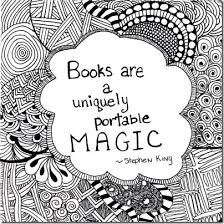
Absolutely agree with Stephen King’s quote. Books have this amazing quality about them, they transport us into another world, a world in which anything is possible. Well with this in mind, let me tell you about a bit of fun I had yesterday,  I posted the first few lines of my novel in this website: http://iwl.me/ I write Like.  My writing was analysed. I have to say I was astonished when the website matched me to Stephen King. One, I don’t write horror! There are scary bits in my book, and parts of it have frightened me. Though I am easily scared by my own writing.  I have too vivid an imagination not to be! This is a bit of a hazard. Two,  Stephen King is a legend, and I’m just well a bit of a work in progress, yes a WIP.

Anyway, I now have the I write like Stephen King badge, why not! Nice to collect a few honours!

http://iwl.me/b/b3a26720

So I thought I would share  some of my favourite Stephen King quotes with you:

“If you liked being a teenager, there’s something really wrong with you.”

(Oops, I loved being a teenager, what can I say?)


“A short story is a different thing all together – a short story is like a kiss in the dark from a stranger.”  SkeletonCrew

(And a short story is so difficult to write! It kills me every time, the kiss of death.)


“The thing under my bed waiting to grab my ankle isn’t real. I know that, and I also know that if I’m careful to keep my foot under the covers, it will never be able to grab my ankle.”  Night Shift


“Sometimes being a bitch is all a woman’s got to hold on to.” ― Stephen KingDolores Claiborne


“Humor is almost always anger with its make-up on.”― Stephen KingBag of Bones
download (3)
“Friends. They aren’t any such thing as good friend or bad friend. Maybe there are just friend. People who stand by you when you’re hurt and who helped you feel not so lonely. Maybe they are worth“Maybe there aren’t any such things as good friends or bad friends – maybe there are just friends, people who stand by you when you’re hurt and who help you feel not so lonely. Maybe they’re always worth being scared for, and hoping for, and living for. Maybe worth dying for too, if that’s what has to be. No good friends. No bad friends. Only people you want, need to be with; people who build their houses in your heart.”― Stephen KingIt
(I have a mega, enormous fascination with time, and so does Stephen King):
download (4)
“Time takes it all whether you want it to or not, time takes it all. Time bares it away, and in the end there is only darkness. Sometimes we find others in that darkness, and sometimes we lose them there again.”
“Time’s the thief of memory.”
– The Gunslinger.
(And I can identify with this Stephen King quote so much):
“I tend to scare myself.”― Stephen King


download (5)


“FEAR stands for fuck everything and run.”  Doctor Sleep


“High school isn’t a very important place. When you’re going you think it’s a big deal, but when it’s over nobody really thinks it was great unless they’re beered up.”― Stephen KingCarrie


“It’s strange how pain marks our faces, and makes us look like family.”― Stephen KingThe Green Mile


images (5)


“Calling it a simple schoolgirl crush was like saying a Rolls-Royce was a vehicle with four wheels, something like a hay-wagon. She did not giggle wildly and blush when she saw him, nor did she chalk his name on trees or write it on the walls of the Kissing Bridge. She simply lived with his face in her heart all the time, a kind of sweet, hurtful ache. She would have died for him..”― Stephen KingIt


“You want to remember that while you’re judging the book, the book is also judging you.”
― Stephen KingNight Shift


“Fear can hold you prisoner. Hope can set you free.”― Stephen KingDifferent Seasons


“If I have to spend time in purgatory before going to one place or the other, I guess I’ll be all right as long as there’s a lending library.”― Stephen King


“Writing is magic, as much the water of life as any other creative art. The water is free. So drink. Drink and be filled up.”― Stephen King


“Reading a good long novel is in many ways like having a long and satisfying affair”― Stephen King


“The Lord is my shepherd. I shall not want for nothing. He makes me lie down in the green pastures. He greases up my head with oil. He gives me kung-fu in the face of my enemies. Amen”― Stephen KingThe Stand


http://stephenking.com/

Oh and I found this fun Stephen King quiz: . http://www.shortlist.com/quizzes/stephen-king-quiz

Do you have a favourite Stephen King quote?  If so, do let me know in the comment box. 🙂


The copy-editing experience

Reblogged from Sandra Danby. Very informative and detailed advice for writers about editing, writing, submitting.

What is a short story?

Reblogged from Bridget Whelan. I struggle with writing short stories. When I came across this I just had to reblog.

bridget whelan's avatarBRIDGET WHELAN writer

short story is a hot air balloonSomeone asked me recently to define a short story. I could understand her difficulty because it’s much easier to say what’s it’s not.

It’s not an idea that could have been developed into a novel had the writer the energy or inclination to go on a 80,000 word journey.

It seems to me that you have to write for the length of the idea. Some need the sharpness of flash fiction; some require the fine detail that’s achievable in 5000 words while other ideas want the expanse of a full length novel to grow and reach maturity. The great Irish writer Seán Ó Faoláin said a short story is to a novel as a hot air balloon is to a passenger jet. I guess the point he was making is that while they may both rise above the clouds they do it in very different ways.

William Boyd writing in…

View original post 640 more words

Writing is About Enrichment

pencil-152713_640
Writing Get Happy


“Writing isn’t about making money, getting famous, getting dates, getting laid, or making friends. In the end, it’s about enriching the lives of those who will read your work, and enriching your own life, as well. It’s about getting up, getting well, and getting over. Getting happy, okay? Getting happy.”
― Stephen King, On Writing: A Memoir of the Craft

I found this quote on the blog of ontheroadtoinkrichment, http://www.inkriched.wordpress.com, and it just sums it all up, doesn’t it?  The majority of us, just don’t make a sack of money from writing. There are exceptions of course. So why do we invest all the time and effort, if money isn’t our goal?

Enrichment. One simple but powerful word. It holds the word rich in its grasp, but means so much more.


taoist-tai-chi-85761778


So on the subject of Enrichment let me share with you my road to enrichment! I have been practising Taoist Tai Chi for several years and it never ceases to amaze me how I am always learning something new. The original Tai Chi master of the group that I belong to, Master Moy Lin Shin, was a sickly youth, who was sent to a monastery, with ill-health.  There he trained in the teachings of the Earlier Heaven Wu-chi sect of the Hua Shan School of Taoism and regained his health. He studied the religious and philosophical side of Taoism and acquired knowledge and skills in Chinese martial arts. In 1949 Moy moved to Hong Kong, there he joined the Yuen Yuen Institute, in Tsuen Wan district in the New Territories, continued his education and became a Taoist monk.

Moy was sent overseas with a mission of spreading the understanding of Taoism and its practices. After some travel, he settled in Montreal, Canada, and in 1970 began teaching a small group of dedicated students. In those early days, Moy taught both the health and martial arts aspects of Tai Chi. Upon moving to one of Toronto’s “Chinatowns” a few years later, he changed his focus, emphasising the health and personal development aspects of Tai Chi, although Moy still placed a strong emphasis on Tai Chi push hands practice and sometimes demonstrated other self-defense aspects of Tai Chi as well.

Moy started with a standard Yang-style t’ai chi ch’uan form, and mixed in elements of other internal arts, and taught it to enable students to learn Lok Hup Ba Fa later. Moy called this modified form Taoist Tai Chi. Moy emphasized the non-competitive nature of his style of teaching and of the form.

A teacher of Taoist Tai Chi is asked to conform to and live by Moy’s

“Eight Heavenly Virtues”:

Sense of Shame
Honor
Sacrifice
Propriety
Trustworthiness
Dedication
Sibling Harmony
Filial piety

We are often told Master Moy’s life story at classes. One particular story remains with me. Master Moy
did not place much emphasis upon the importance of money, in fact he had very little. He would sometimes come to class with not enough money in his pockets for his bus fare back. His pupils would gladly give him money so he could get home.

He began practising Taoist Tai chi as a means to manage a severe health problem. He succeeded, and not only did he improve his ailing health but his legacy is an organisation that is now in multiple countries across the globe. His original Tai Chi set has been handed down, more or less in its original form, and teachers give their time for free, volunteering to teach pupils Tai Chi. There is a spirit of cooperation, and friendship, within the whole Taoist Tai Chi culture. I so admire this ideology and the selflessness of the instructors. This means that each local group works together doing the Tai Chi set as a team. As I said, Master Moy didn’t have much money but I expect he was happy and fulfilled. The older I get the less I think we really need. I know that some people may say, you have more than most, and I would say this is true, but I don’t believe that material things make us happy. All we really need are the basic things in life:  a roof over our head, enough food to eat,   and the knowledge that our families are safe, in good health and above all else enjoying a full, and happy life. Everything else seems immaterial.


Here are some links which you may find interesting:

Master Moy doing the Tai Chi Set:

http://www.taoist.org/about-us/our-founder/

Taoist Tai Chi Society of Great Britain, Canada, and USA:

http://www.taoist.org.uk/
http://www.taoist.org/canada/
http://www.taoist.org/usa/

Well, as you can see Stephen King is right, enrichment is the goal.  Oh and if you take up Tai Chi, and write, I can definitely say you will be happy! I know I am. Go for it!

Characterisation: The Bedrock Of Any Novel

In the Futurelearn Start Writing Fiction course we looked at Josip Novakovich’s methods of Characterisation:

Here is my summary of Novakovich’s methods:

teacher-359311_150


This looks a bit like me, with my glasses on! Except no grey hair yet, well none I’m admitting to!

All the quotes I have taken as examples are from Hiromi Kawakami’s excellent book, Strange Weather in Tokyo which I have recently reviewed and given five stars.

Summary – In this method tell us what your characters are like and what they like doing using the 3rd person. The advantage of this method is simplicity and readability. The disadvantage is a tendency to tell rather than show. No dramatic action or dialogue takes place.

His full name was Mr Harutsana Matsumoto, but I called him ‘Sensei’. Not ‘Mr’ or ‘Sir’, just ‘Sensei’.
He was my Japanese teacher at secondary school He wasn’t my form teacher, and Japanese didn’t interest me much, so I didn’t really remember him. Since I finished school, I haven’t seen him for quite a while.

From this opening summary Hiromi Kawakami swiftly, and expertly, takes the reader into a scene at a crowded bar, with dialogue between the two main characters of the novel, Tsukiko and Sensei.

Repeated action or habit. This is a people watching exercise. What do your characters do? Have they any unconscious habits, or actions? The advantage of this method is that it saves time. The disadvantage is that it delays entry into dramatic scenes.

Sensei had always held an eraser in his hand when writing on the blackboard.

Sensei did not like anyone to pour his drinks for him. Whether it was beer or sake, he meticulously poured for himself.

Self portrait – Introducing him or herself. Can be achieved directly or indirectly. Works better if the words create a picture of the character or create some drama.

Here is Tsukiko’s self-portrait:

I, on the other hand, still might be considered a proper adult. I had been very grown-up when I was in primary school. But as I continued through secondary school, I in fact became less grown-up. And then as the years passed, I turned into quite a childlike person. I suppose I just wasn’t able to ally myself to time.

This short paragraph tells us so much about Tsukiko.

Sensei tells us about himself in a lengthy story about his wife and son and himself going hiking.

It is interesting how Hiromi Kawakami uses the differing self portraits of the two characters, to suggest the disparity in their ages, the younger of the two, Tsuikiko’s is short and to the point, and Sensei’s is long-winded and rambling.

Appearance – We can learn an awful lot about a character from appearance. I liked Novakovich’s tip about hands. Hands can be used to great effect or even feet or the way a person walks. Writing captures motion well. Again careful choice of words seems to be the key.

Descriptions of Sensei’s appearance:

His white hair was carefully smoothed back, and he was wearing a starched white shirt with a grey waistcoat.

He wore a tweed suit with leather shoes. His suit looked old but well-tailored.

When he was chewing his mouth was that of an old man.

Details about Sensei’s gait:

Sensei held his umbrella straight up and started walking. I could sense from his gait the tacit but full expectation that I would follow him.

Scene – Set your character in motion, combining appearance, action and dialogue. Advantage of this method. The reader is with you visualising and experiencing the scene. Most lifelike. The disadvantage: it is difficult to include back story, there are only so many flash backs, and memories that you can interweave into plot.

‘These elms are so verdant, aren’t they?’ Sensai said, looking up at the trees beside the bus stop. He was right – dense with leaves, the branches of the elms waved in the breeze. Although the wind was light, high in the sky, the tops of the elms swayed even more grandly.
It was a hot summer day, but the low humidity kept it cool in the shade. We took the bus to Teramachi and then walked a little. Sensei was wearing a panama hat and a Hawaiian shirt in muted colours.

 

owl-158411_150

Combining techniques: Combine two or more of the above techniques, making the characters development incremental.

The advice to combine techniques is excellent, the sound of a character’s voice, and sensory details can also create a powerful image:

It was only his voice that I remembered from the beginning. He had a resonant voice with a somewhat high timber, but it was rich with overtones. A voice that emanated from the boundless presence by my side at the counter.

At some point, sitting beside Sensei, I began to notice the heat that radiated from his body. Through his starched shirt, there came a sense of Sensei. A feeling of nostalgia. This sense of Sensei retained the shape of him. It was dignified, yet tender, like Sensei. Even now, I could never quite get a hold on it – I would try to capture it, but the sense escaped me. Just when I thought it was gone, though, it would sneak back up on me…Wasn’t a sensation just that kind of indistinct notion that slips away, no matter how you try to contain it

Author’s bio on Goodreads:

Josip Novakovich (Croatian: Novaković) is a Croatian-American writer. His grandparents had immigrated from the Croatia, then part of the Austro-Hungarian Empire, to Cleveland, Ohio, and, after the First World War, his grandfather returned to what had become Yugoslavia. Josip Novakovich was born (in 1956) and grew up in the Central Croatian town of Daruvar, studied medicine in the northern Serbian city of Novi Sad. At the age of 20 he left Yugoslavia, continuing his education at Vassar College (B.A.), Yale University (M.Div.), and the University of Texas, Austin (M.A.).

He has published a novel (April Fool’s Day), three short story collections (Yolk, Salvation and Other Disasters, Infidelities: Stories of War and Lust), two collections of narrative essays (Apricots from Chernobyl, Plum Brandy: Croatian Journey) and a textbook (Fiction Writer’s Workshop).

Novakovich has taught at Nebraska Indian Community College, Bard College, Moorhead State University, Antioch University in Los Angeles, the University of Cincinnati, and is now a professor at Pennsylvania State University.

Mr. Novakovich is the recipient of the Whiting Writer’s Award, a Guggenheim fellowship, two fellowships from the National Endowment of the Arts, an award from the Ingram Merrill Foundation, and an American Book Award from the Before Columbus Foundation. He was anthologized in Best American Poetry, Pushcart Prize, and O.Henry Prize Stories.

He taught in the Master’s of Fine Arts program at Pennsylvania State University, where he lived under the iron rule of Reed Moyer’s Halfmoon Township autocracy. He is currently in Montreal, Quebec teaching at Concordia University.

His book Fiction Writer’s Workshop, may be of interest: .

ISBN 1884910394 (ISBN13: 9781884910395)

As might Marakumi’s excellent novel:

Strange Weather in Tokyo Hiromi Kawakami http://www.portobellobooks.com

ISBN 9781846275104

Photos – http://Pixabay.com

Hunger games: Cat’s play, Gym babe.

imagesOUQI0FYS

It’s coming to the end of my ten LA Fitness sessions, via Groupon. Has it made any difference? Yes I think I’ve noticed a few positive aspects, one I seem to be walking faster, two I have more energy, and three I do believe I may be losing a bit of weight. Hip Hip Hoorah. Though this could be due to my enforced diet, aka Gallbladder problem. Am I fit enough to survive in a Hunger Games scenario? No. Definitely not. But it’s a start, and a start is better than nothing. Anyway I don’t have the killer instinct to survive for more than a second in the Hunger Games. I’m a pussy cat, the best I could do would be a scratch, and a hiss, and a bit of feline stretching, that’s it.

imagesH0RD2ZG3

I’m quite proud of my multi tasking. On the way to the gym, I read, and make notes on the bus. I must look like this nerdy book person. Well that’s ok because I suppose I fit that description quite well. Today I was reading Eleanor and Park by Rainbow Rowell. I was so engrossed, Eleanor and Park is just cute, CUTE, C-U-T-E, C – U – T – E, and for that half an hour I felt I had been transported back to the late 1980’s. Yes I remember The Smiths, Joy Division, Miami Vice. It brought back a flood of memories. It was wonderful, so wonderful that I nearly missed my stop. Fortunately I looked up and had this panicky moment when you kind of don’t know where you are and think that you’re way beyond where you should be, but it was ok, I hadn’t missed my stop. If I had missed it that would have been a nuisance as the next stop is the hospital and I didn’t fancy going there. I went there last week for a scan, upper abdomen – yes gallbladder issue. So there’s no way I fancied ending up there again. No. Once was enough. It was messy, gel all over my tummy. While I was lying there I had a bit of a nostalgic moment. The last time I had gel over my tummy I was pregnant and that was a long time ago. Happy times, funny how these kind of things bring back all sorts of memories.

Anyway, getting back to my gym session, I did my workout, ended up in the pool. It was busy, very busy, not surprising really when you consider that today is a bank holiday. So I had to avoid the other swimmers. Tricky. There was definitely this ripple effect. Too many bodies, the water was getting out of control. I prefer it when it’s quiet. Though I like the sauna and steam room when they’re busy as it’s great for eavesdropping. Yes, I admit it, I’m a terrible eavesdropper. I think it is almost compulsory if you’re a writer. You just can’t help yourself. It’s amazing what people will say in such an enclosed space, especially considering that they know that there’s just no way that people aren’t listening in. So I think it’s fair dues to blog about it. One time I was in a sauna, and these two men were chatting, confessing. One of them was admitting that he used to go to the gym without paying – not LA Fitness – I hasten to add, but some other gym. He kept doing it until he found God. Then he stopped. From this point on the conversation changed. God was mentioned a lot. A heap of a lot. I almost felt like he was in there with us in the sauna, purifying our sins with the sauna heat. Well the heat got too much for me, so I had to go. I left those two guys praising God, in the sauna. It reminded me of a comedy sketch. It was just so bizarre. I hope this doesn’t offend anybody, I’m not religious myself, but I do believe in respect, respect for other people’s views. So if I’ve offended anyone, I apologise.

Let’s see, what was I talking about, oh yes, waves. The waves reminded me of a story my dad told me, another swimming pool tale. He used to go to Portobello baths when he was a young lad. I expect there might have been a sign like this one:

patronsposterspotchannels

Does anyone pay attention to those signs. I doubt it! They had a wave machine. He loved it. The waves would bounce him around and he had an excuse to collide with all the pretty girls! The girls pretended they needed saving and well he was happy to oblige. He played the part of a life guard. He hasn’t changed much, he still appreciates the ladies, nowadays at the age of eighty-five he gets a kiss at the end of his golf matches! My mum knows, she indulges him. Good on him, I say, why not. Life is too short not to enjoy it. Believe me.

imagesFR5XW1T6

Photos – Google images.

Hooked by Lines and Images

th0L9EWJ37

This sounds like I’m going fishing and in a way I am. I’m searching for that illusive first line of a great story. In the Futurelearn Open University course we touched upon sources of inspiration: lines and images. I got hooked by the idea.

4.10 Hooked By Lines and Images.

When I first started writing fantasy, I’d say that visual images, were my starting point for inspiration. Fantasy and visual images just seem to be the perfect coupling. Having said that, my father’s first words, recorded into a voice recorder, were without doubt the perfect start to a new project, a travelogue of his life and adventures. He began by recalling, a humourous anecdote, one of his earliest memories. I’m not quoting him exactly but it goes something like this: At age two I was pushed out of the pram by the arrival of my sister Wendy. It was a cold winter’s day in February. My mother told me to go out with my big brother Stanley to play with the big boys in the snow. When I came home I told my mother that the big boys had looked after me well and they had said, “You’re a wee brother ain’t you?” When in fact they had called me a wee bugger!”

th4WB5HK5G

I just knew that these innocent words spoken by his two year old self were the right words, they were his essence if you like, a wonderful mix of his humour with his adventurous spirit. They were the very first words he recorded! He must have known too! They just sounded so perfect. This early release from the pram rather than disturbing him, or making him jealous of his sister, did neither, instead it just encouraged him to embark upon many travels, though the experience did have one other lasting effect, it left him with a life long hatred for cold weather! Which he still suffers from today living up in Bonnie, but chilly Scotland.

So whether you arrive at your first sentence by words or images, or a combination of both it doesn’t really matter, just make sure you get there.

4.11 Hunches that matter

thMHQGASO4

If it matters then it should appear in your writing, but listing who you are, and what matters to you, before you begin writing, is not something that I have actively done before. In fact I would argue that all of who you are spills out into your writing without your even realising it. This process is scary, an unintentional disrobing, that propels you out there almost without you’re conscious consent. I’m not sure whether it’s a good idea to make lists of who we are, somehow that seems a bit forced to me. Instead let that, who I am, warts and all, come out naturally in your writing. You may discover things about yourself along the way! It can be enlightening.

Writing about personal concerns

thVWHJDZAU

This is at the heart of good writing. If you don’t care about what you write about then your words will mean little or nothing, and your readers will feel cheated. So embed those personal concerns into your writing, let them seep into the bedrock of your words.

Extraordinary versus ordinary

thJT2CEPBT

We looked at the following quote from Raymond Carver:

“It’s possible, in a poem or short story, to write about common-place things and objects using commonplace but precise language, and to endow those things – a chair, a window curtain, a fork, a stone, a woman’s earring – with immense, even startling power. It is possible to write a line of seemingly innocuous dialogue and have it send a chill along the reader’s spine – the source of artistic delight, as Nabokov would have it.”

Raymond Carver, nailed it!

It sounds to me as if a writer’s job is to make the commonplace anything but commonplace. Today I went to the gym and finished off my attempt at a fitness routine with a session in the swimming pool. A commonplace type of activity, for regular gym users, but in my case I am somewhat handicapped, not just because of my general level of unfitness but also because I am very short sighted. I only have at best a hazy view of people in the pool. I can make out that they’re humans, and if I squint I can just about make out what sex they are. Today, I thought I saw a young woman extending her hand, at the side of the pool, in an odd salute, but in fact as I swam closer I saw that her hand was actually her leg extended up close and personal to her face! I concluded that she must be a dancer and this was confirmed by a closer inspection of her hair which was wound in a tight bun, a dancer’s trademark. Being short sighted can be awkward, and downright hazardous at times. Earlier on, I saw the blurry form of a young man sitting at the edge of the pool on the steps. He sat for ages just waiting. What was he waiting for? He wasn’t waiting for the bus. I had this feeling that he was watching me yet I had no way of telling whether this was a figment of my imagination. I just couldn’t see. He eventually began his swim, and probably thought I was staring at him. I don’t blame him, I probably was, at least my myopic self was!

Images courtesy of Google images.

Mantra For Authors: Editing Is My Friend

1367245781_506161166_1-Fotos-de--Meditacion-con-Sonido-Mantras-y-Vocales

A mantra for all authors, editing is my friend, editing is my friend. Welcome new friend. Let’s hope we enjoy a long and happy relationship.

Editing is such an important process. Read over what you’ve written, edit. Then take a break. Return to it again. Read it aloud. Edit again, and again, and again. You get the picture.

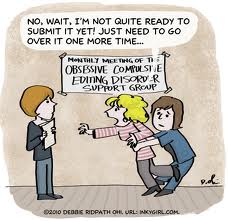
But don’t become obsessed, editing is important but so is a life.

images editing

Joining a writer’s group can be really helpful. Also it can drag you away from the internet for a while and you can interact with people face to face which is nice from time to time. Not saying that it’s not nice having internet pals too. They’re cool too, but you know what I’m talking about. I found having other writers critiquing my work scary to begin with but it’s well worth it. Don’t be put off by what people say, accept changes that you agree with and ignore opinions that you don’t agree with. Believe in yourself, after all it is your work, your story, at the end of the day you have to be 100% happy with it. Yes 100%. I’m talking to writers here.

Simple editing mistakes are easy to make. I have just found some that I didn’t notice when I was typing the following short passage for a FutureLearn exercise, so I thought I’d share them with you, as an example of why editing is so important!

The Red Notebook:

I followed at a short distance behind her as she entered the refectory. She wore a plain white cardigan reminiscent of cling film. Her mother kept a clean house and was always wrapping everything up in neat little cling film packages. She hated it but her influence was all pervasive, even her socks clung to her feet, neat dancers socks, moulded to her skin, cutting all hope of circulation. Her jet black hair was tied back in a pony tail that seemed to be wrenching the very roots of each follicle of hair from her scalp. No lipstick blemished those full lips. Her only adornment was the bright red notebook which seemed at odds with the rest of her ensemble. The notebook took pride of place on the table in front of her and next to this, she discarded a heavy set of cumbersome keys.

I stood up and crept behind her. I tried to see what she was writing, but the words were as bloodshot, and unreadable as her wild eyes. She picked up a plastic cup of water, gulping it down in one ferocious gulp. She spluttered, droplets of water fell from her lips blemishing the creased cover of her notebook. She wiped the water away, staring at it hysterically as if she was searching for answers. Her fingers ironed the crease but the crease remained, mocking her.

She stood up, toppling her hair back in one swift movement. I caught it. I felt responsible but I didn’t know why. “Are you ok?” I asked. She looked right through me as if I was transparent. I picked up her keys, trying to elicit a response by saying ” Don’t forget your keys.” She ignored me as if I was transparent, an unnecessary interference to her otherwise perfect day.

At least one of my mistakes was amusing! Toppling her hair back! Well it could have been, who needs a chair? The rest as far as I can see were missing hyphens, and I said transparent twice.

Reading in the genre you are intending to write in is so important. I read a lot of YA because I write YA. Also it is equally important in my opinion to read all sorts of books, these help broaden your writing skills. Anyway I love reading so it is all good! Oh and do reviews. I’m new to this but I’m sure this will help too.

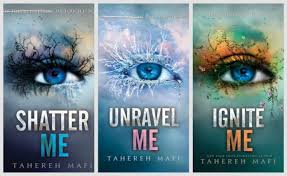
On the subject of books, I just love the artwork in the Shatter Me series, aren’t they fabulous?

images shatter me

Varying the structure of your novel using different words is an important skill. Short words add pace, as do short sentences. Leave out too many adjectives, and adverbs. (I find this one difficult!) Use a dictionary, and a thesaurus. Leave out clichés.

Don’t destroy what you’ve written. This sends shivers down my spine. Keep less than perfect pieces as a reminder of how your work has progressed. There might be a good idea in there that just needs reworking.

My fantasy YA novel is currently in its final stage of edit. I didn’t follow a plan. I just had lots of ideas and wanted to get them down quickly before they evaporated! I found this approach was great creatively but had the down side of an awful lot of re-editing and re-structuring, so I wouldn’t recommend this. A little bit of planning is important. So next time round I’ll do a rough plan which will allow me flexibility if I want to change it.

The level of research required depends on the novel you’re writing, e.g. I imagine historical fiction is one of those genres that involves masses of research. Even so, I had to research crystals, shadows, the Corpus Christi Clock, Grantchester, and Cambridge ghost stories for mine.

I joined a local writer’s group, Cambridge Writers, http://cambridgewriters.net/ and have found this very helpful. I would highly recommend finding a group in your local area.

Alternatively try an on-line writing group. My fellow Futurelearners suggested these two websites:

http://scribophile.com/

http://mywriterscircle.com/

One thing that surprised me about the following FutureLearn exercise, is that I found an idea for a story from a radio prompt. I have never tried this before, so thanks Futurelearn, good tip. In the first draft I just quickly typed in some rough draft ideas. In the second draft I developed the idea by using different words, for instance I took out the word stared and used a different word, barrelled to suggest her eyes moving furiously in excitement, and I changed some of the other details to make the paragraph more interesting, using everyday words such as nettled, sting, mirror, signal, manoeuvre, tank.

1st draft:
Amy stared at the on-line application form for the local radio apprenticeship scheme. “I would make a great local apprentice because,” ……………The next prompt was easy, “If there is one thing I could change about where I live it would be…..

All of her eighteen years she had lived in Cambridge. There was one thing about Cambridge that really riled her. Public transport. She lived on the outskirts, in suburbia, and the buses were non existent in the evening. Nights out meant asking her long suffering parents to pick her up or get an expensive taxi home. Or even worse accept a lift from one of her friends. Not that they drove home drunk but their lack of attention to detail made her wonder if they had bribed the driving instructor to get their licences. Why had her parents decided to live in this no go zone? What was wrong with living in the centre of the town?

A message on her Facebook flashed up. Harry had liked her new profile picture. Her shoulder length blonde hair, bright blue eyes, and clear complexion, made her laugh. No evidence at all of all those late nights. She was the perfect candidate for a job in local radio. Six o’clock starts. No problem.

2nd Draft:
Amy’s wide eyes barrelled along the prompts on the on-line application for the local radio apprenticeship scheme. “I would make a great apprentice because,” I’m super cool, of course! The next prompt was, if there is one thing I would change about where live it would be.” Simple, child’s play.

All of her eighteen years Amy had lived in Cambridge. Sigh. There was one thing about Cambridge that really nettled her. Public transport. A sting in the backside. She lived in wretched suburbia and buses were an alien species in the evening. Night outs meant asking her long suffering parents to chariot her home, or get a taxi, sorry wallet. Or even worse steal away in one of her friend’s cars. Not that they drove home drunk, at least she hoped they didn’t, but mirror signal manoeuvre didn’t seem to be in their dictionary. Why had her parents, god love them, decided to live in this no go zone? Even combat troops have better transport facilities, a tank would be acceptable.

A face book message, flashed up. It was Harry. Hope he wasn’t flashing his pecs again! Harry had liked her new profile picture. Her shoulder length blonde hair, bright blue eyes and clear complexion were a hit with the boys. No evidence of those late nights lingered, she was an accused but flawless culprit. The perfect candidate for a job in local radio. Six o’clock starts, no problem.

Just to keep you from getting bored I thought that I’d end on a light, well rather silly note.

images cows

An earlier Futurelearn exercise using familiar words in unfamiliar places:

Arthur’s hair sat on his scalp like an apologetic cowpat. His life had turned into a hopscotch, he leapt from pat to pat but nothing changed. His horizons narrowed with every throw of the dice. He was not a gambling man but he sensed that his luck was out. The aloe vera juice oiling his biography had formed a stagnant, tropical pool.

Cowpat was a bit of a crazy choice of word but I thought it suggested that Arthur wasn’t a happy type of bloke and that he felt crushed, and trampled on. The hopscotch notion I used to convey a sense of childishness. I’m not sure about the aloe vera juice I think I may have gone too far with that one!

Thanks to Futurelearn for all the tips. Enjoying the course.

Photos courtesy of Google Images.